Historic stenciling and decorative stencil work

Historic stencil replication and reinstatement for period rooms, listed buildings, churches and private homes across the North West.

Before and after stencil restoration

One example below. The portfolio and case studies cover St Francis de Sales, Werneth Hall Oldham and bespoke Victorian mansion schemes.

See all stenciling samples in the portfolio →

We trace surviving fragments, agree samples in the room, then reapply stencil schemes by hand. Work is planned to sit with existing gilding, marbling or joinery rather than overpower it.

Historic stencil replication and reinstatement

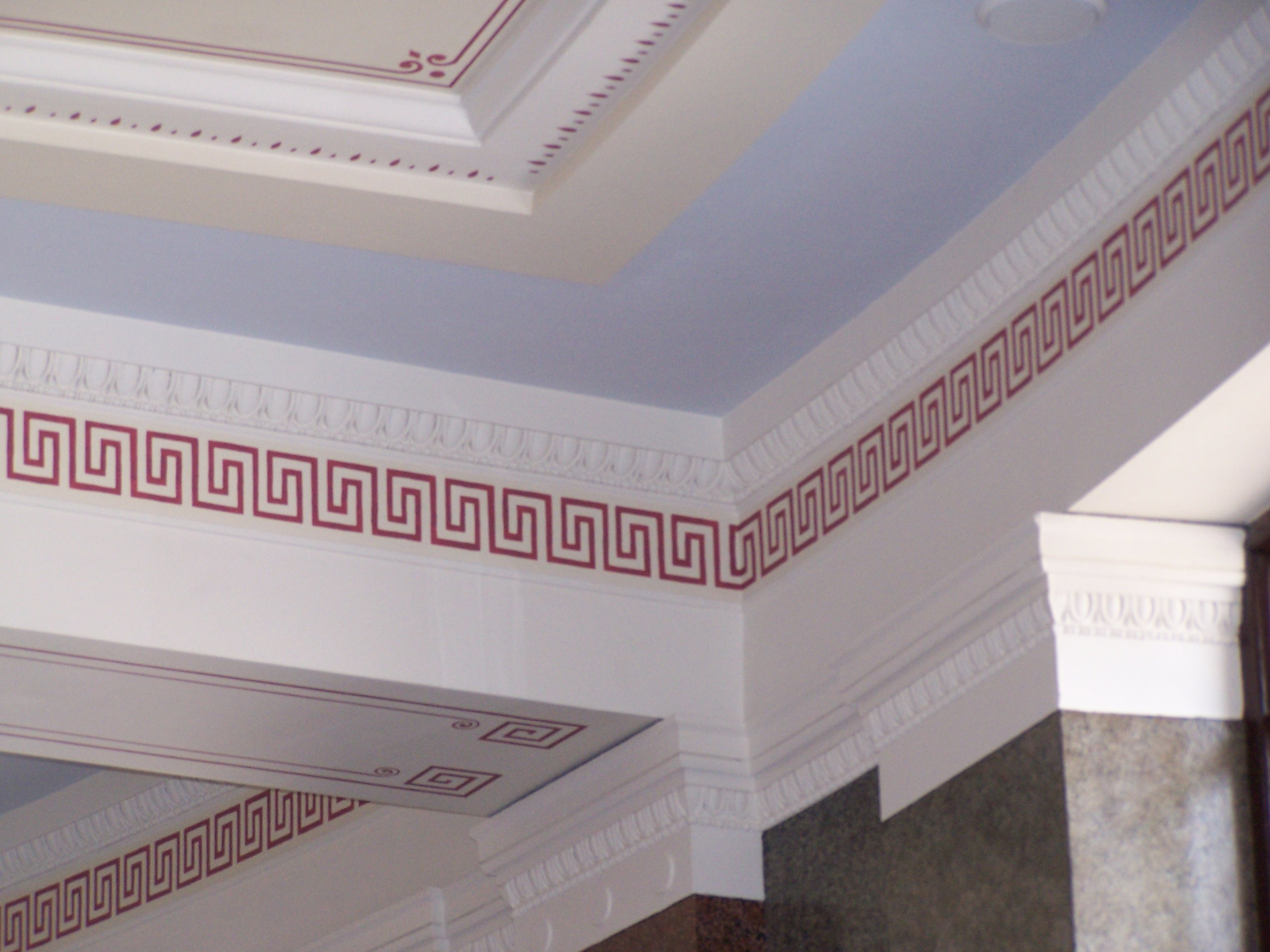
We trace, match, recreate and reinstate original stencil patterns found in historic and heritage interiors, from civic and public buildings to period and private homes. Existing decoration is carefully studied to reproduce the original design, scale, repeat and colour as faithfully as possible.

Samples are prepared and agreed before full application, allowing the finished work to sit naturally alongside the surviving decoration and within the character of the interior.

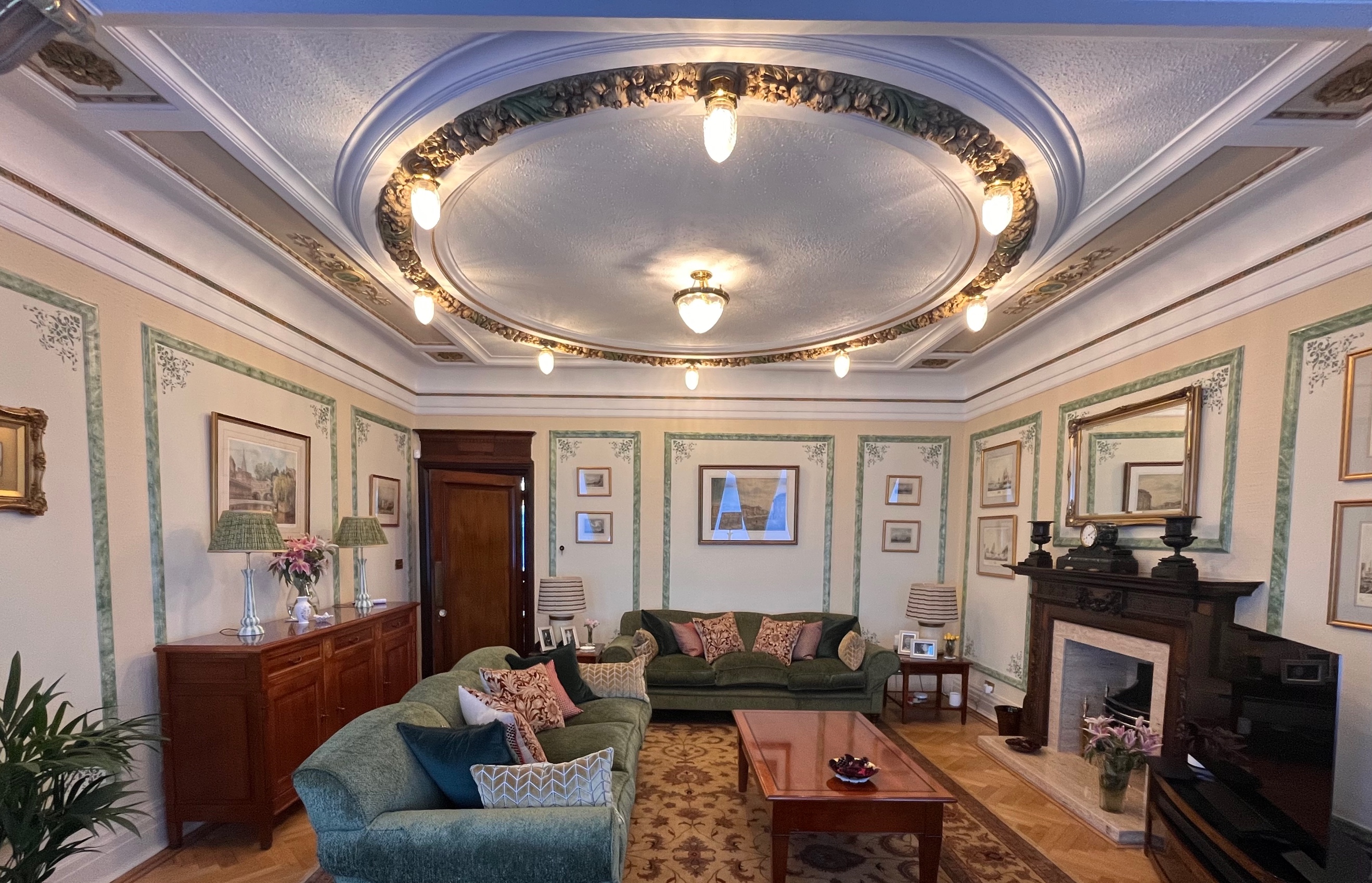
Bespoke stencil scheme in a Victorian mansion drawing room

Read the full case study →

Silvano was commissioned to develop a bespoke stencil scheme sympathetic to the character and proportions of a Victorian mansion drawing room.

The project involved researching appropriate period decorative motifs, developing and refining the design, creating the stencils by hand, and applying the finished decoration directly to the walls so it frames the existing panels without overpowering the architecture.

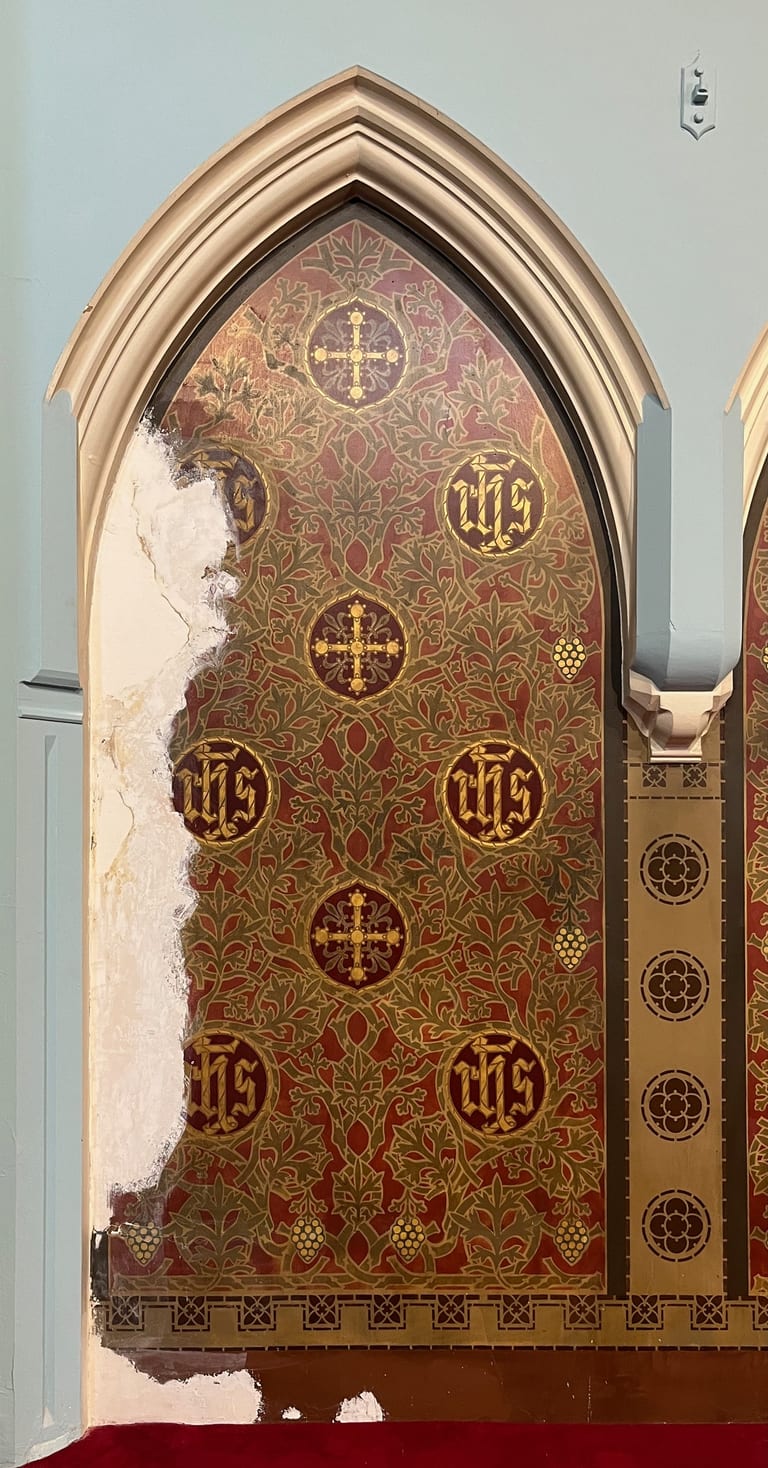
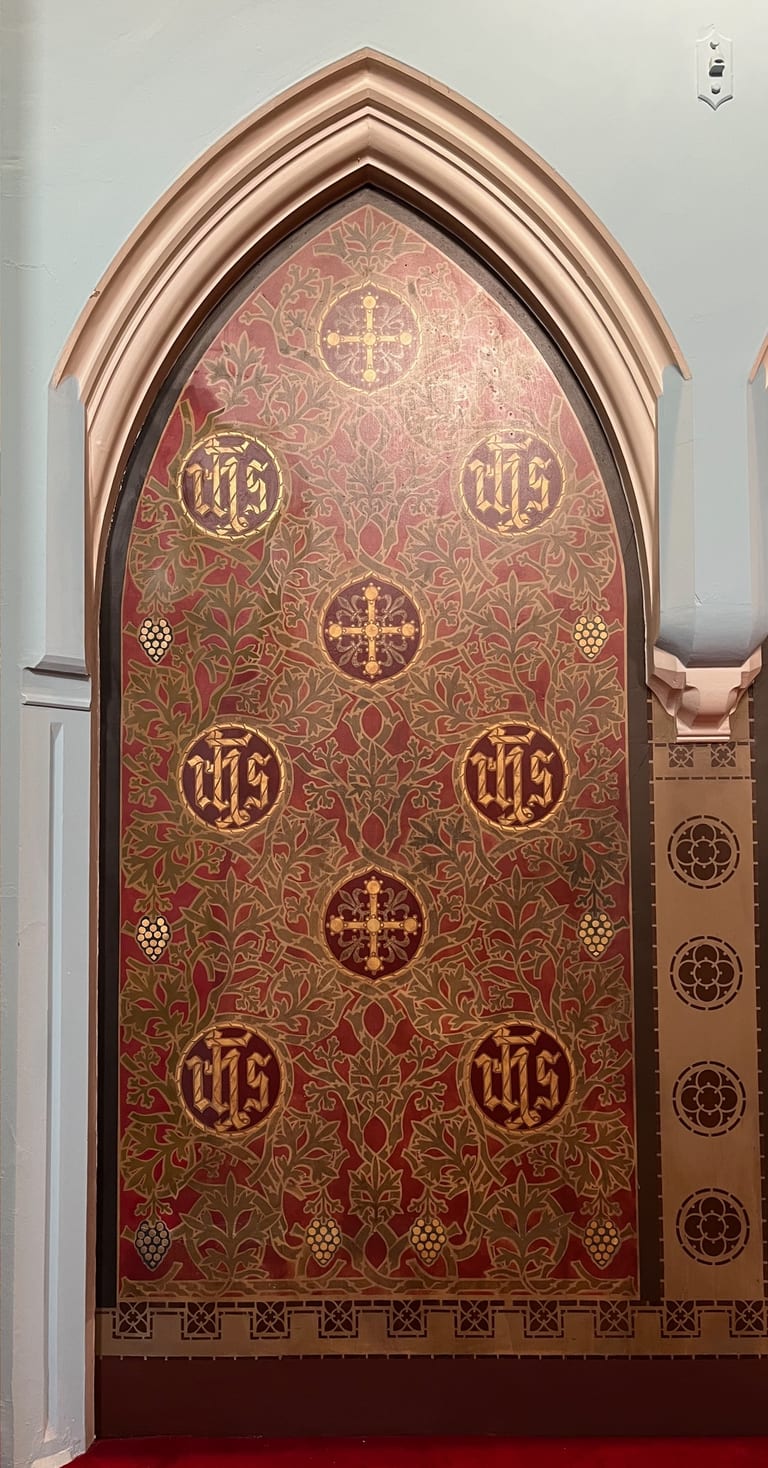
Restoration of historic stencil decoration, St Francis de Sales Church, Walton, Liverpool

View before and after restoration →Read the full case study →

At St Francis de Sales Church in Walton, we carried out the restoration and reinstatement of historic decorative stencil work affected by water infiltration.

The moisture had caused areas of the original plaster to deteriorate and crumble, resulting in the loss of sections of the decorative scheme. Unsound plaster was carefully removed and replaced using traditional lime plaster, selected to remain compatible with the historic fabric of the building.

Once the new plaster had cured, surviving areas of decoration were studied to recreate the original pattern, scale and colour palette. The missing stencil work was then carefully reapplied by hand, allowing the restored areas to blend naturally with the surviving historic decoration while preserving the character of the original interior.

Domino stencilled wallpapers at Werneth Hall, Oldham

View before and after restoration →Read the full case study →

In the early 19th century, artisans created decorative wallpapers by joining individual rectangular sheets of paper together and applying a ground colour. The decorative patterns were then built up by hand, using heavy paper or metal stencils to apply each pigment colour individually.

At Werneth Hall, a framed domino stencilled wall panel had suffered losses and filler repairs. After stabilisation, the missing pattern was reinstated by hand following the surviving design, colour by colour through paper stencils.

Victorian mansion: gilding, marbling and stenciling

Decorative restoration in a private Cheshire home: faux marble columns, gold leaf, historic stenciling, staircase ornament and regilded mirror frames.

Read residential case study →

View full portfolio →

What our clients say

6 public reviews on . Read all reviews

  • ★★★★★
    “Silvano recently carried out exceptional work on a high valued work of art. I would have no hesitation in recommending him.”
    Andrew Crudge
  • ★★★★★
    “My company have used North West Murals on numerous commercial projects and have always found their work to be of extremely high standard and very professional.”
    Keith Dowling

Request a free estimate

Gilding, restoration, faux finishes and stenciling across Warrington, Liverpool, Manchester and Cheshire. Call 07801 311972 or start online.