
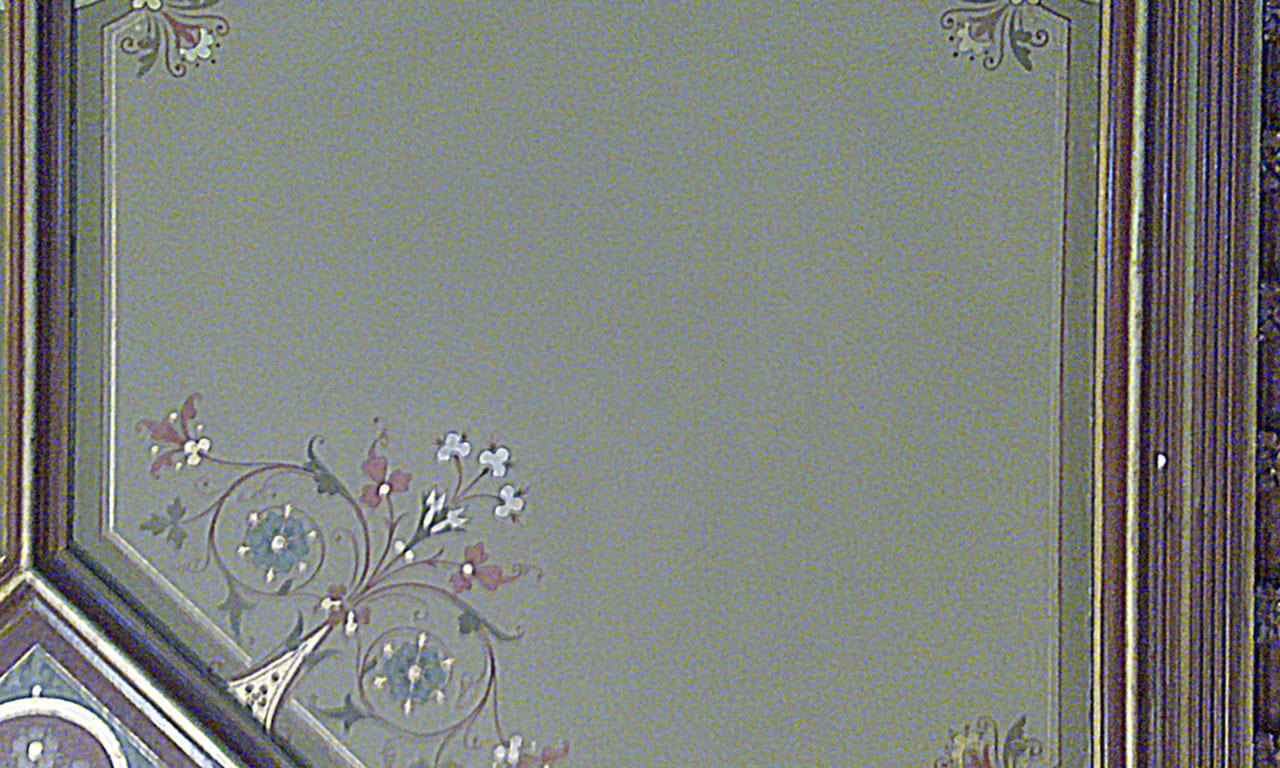
Domino, or stencilled, wallpapers were made in the early 19th century by joining individual rectangular sheets of paper together and applying a ground colour. The decorative pattern was then built up by hand, using heavy paper or metal stencils to apply each pigment colour individually.
At Werneth Hall in Oldham, the commission focused on a framed wall panel decorated in the same domino stencilled technique, rather than a full room of hung sheets. That panel had suffered visible losses: areas of the original pattern and ground had gone, and the gaps had been patched with pale filler, leaving the decoration looking broken and unfinished.
Over time, historic surfaces like this can suffer from peeling, losses, tears and other deterioration. With careful professional conservation, damaged areas can be stabilised, repaired and sensitively reintegrated, recovering much of the original appearance while preserving the historic character of the room.
What domino stencilled wallpaper is
Before roll wallpaper and machine printing became standard, decorative papers were produced in small rectangular sheets. Individual sheets were joined together and given a ground colour, then the pattern was built up on top colour by colour.
Each pigment colour was applied separately through a heavy paper or metal stencil, which is why surviving examples show crisp repeated motifs with the slight irregularities of hand application. That hand built quality is part of what makes them historically significant, and part of what a conservator must preserve.
How these surfaces deteriorate
Paper based decoration is fragile. Peeling, tears, lifting edges and losses of the ground and pigment are common, often following damp, movement in the wall behind or earlier repairs that have aged badly.
At Werneth Hall the panel had lost areas of its surface, and earlier fills had left pale patches that interrupted the delicate floral pattern and the gilt detail around the border.
Conservation approach
The priority was to stabilise first, then repair, then reintegrate. Loose areas were secured, the damaged ground was made good, and only then was the missing pattern restored.
Reinstatement followed the surviving design: the surviving stencilled flowers, scrolls and corner motifs set the scale, colour and character of the new work, so that the restored areas sit naturally within the historic panel rather than standing out from it.
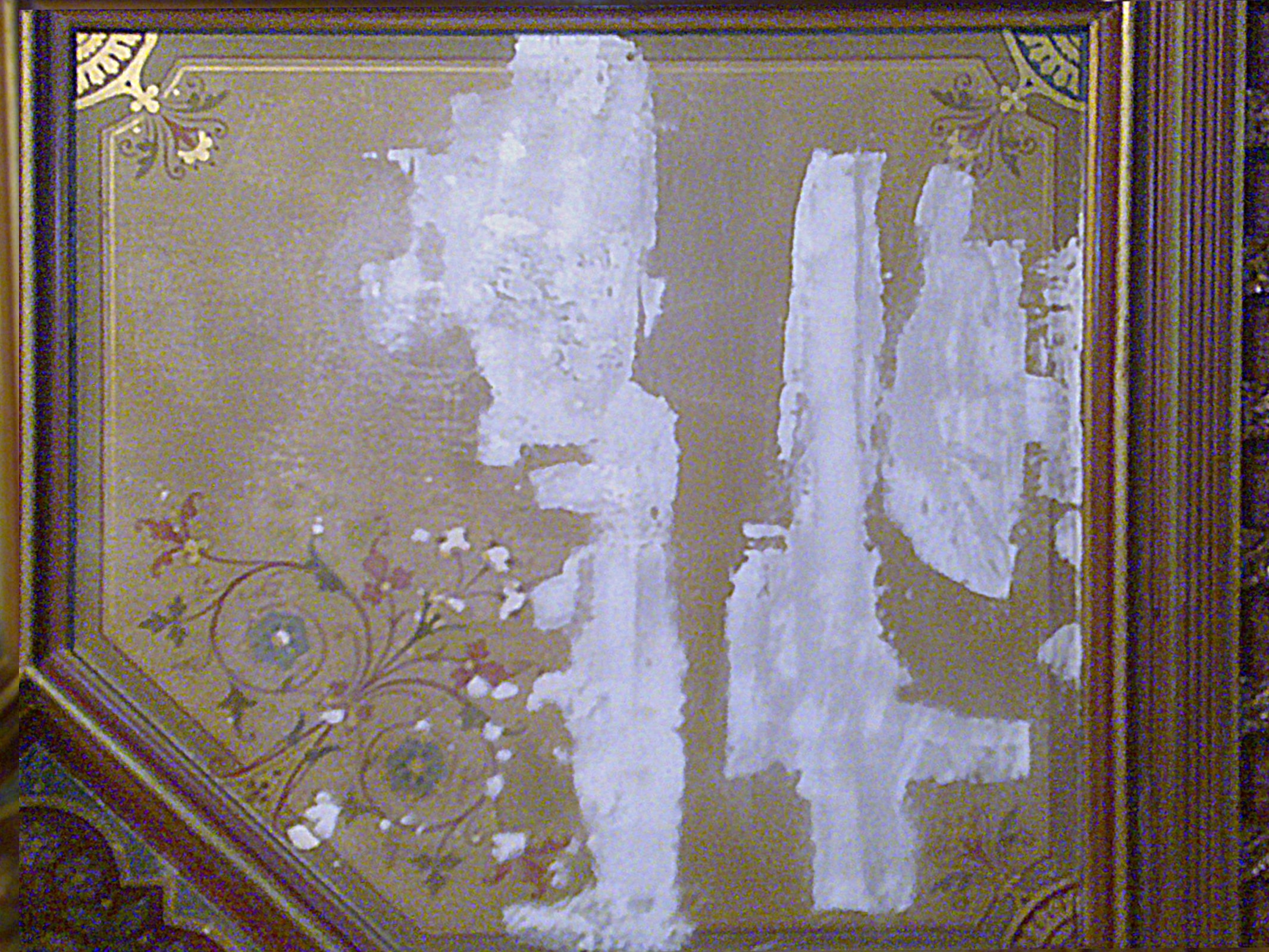
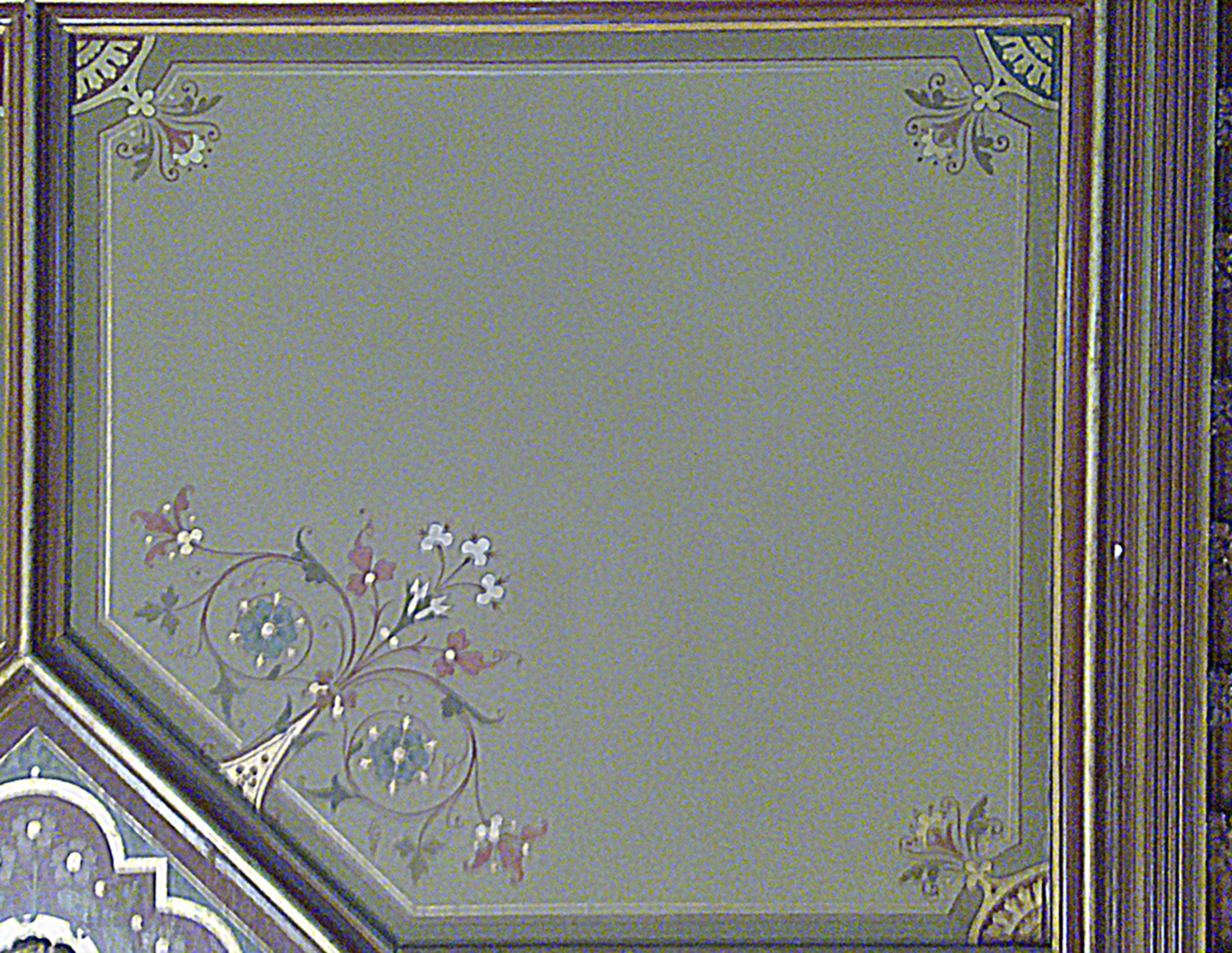
Hand-stencilled decorative panel conserved, Werneth Hall, Oldham
Losses and unsound overpaint on a historic stencilled panel before stabilisation and repair. Drag the handle to reveal the same panel after conservation and reinstatement of the original pattern.
Drag the gold handle right to reveal the after image.
Before: Decorative stencilled panel with losses and filler before conservation at Werneth Hall, Oldham. After: Decorative stencilled panel after conservation and hand-stencilled reinstatement at Werneth Hall, Oldham.
Why conservation rather than replacement
Replacing a historic stencilled panel wholesale would remove evidence of early 19th century craft. Conserving what survives, and sensitively reintegrating only what is lost, keeps the original fabric on the wall and the interior's history legible.
If you look after a historic hall, museum or private house with stencilled or domino wallpaper, we can assess condition and advise on stabilisation and repair before further loss occurs.
Outcome
- The panel reads as a continuous decorative surface again, with the stencilled floral motifs and gilt border restored to a coherent appearance.
- Damaged areas were stabilised and repaired, reducing the risk of further peeling and loss.
- Surviving original decoration was retained, with new work following the historic pattern rather than replacing it.
- Reference project for historic halls, museums and private owners of early stencilled wallpapers in Greater Manchester and the wider North West.
Further reading
Similar project?
Browse more case studies or portfolio photography.