
Published
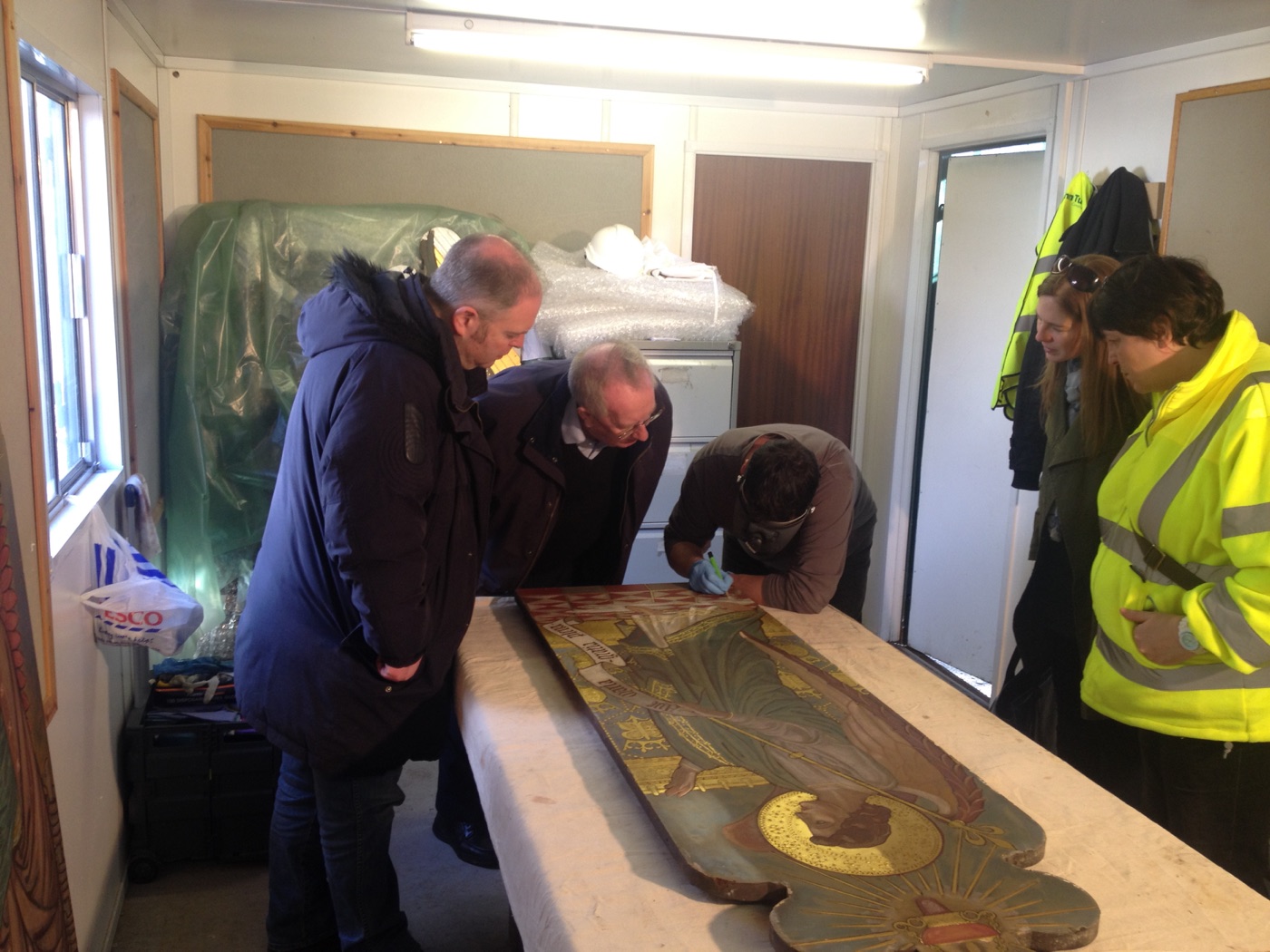
North West Murals founder Silvano Cioci Faux filmed this session for the St Marie's Heritage Group and Halton & St Helens VCA. It documents church painting restoration on late 1800s oil panels on wood, not a staged demonstration.
What this film shows
The parish published the Workshops: Silvano at work video so local residents could see conservation work that usually happens off public view. Panels from the St Marie's altar scheme were treated while the nave and sanctuary were refurbished with Heritage Lottery Fund support.
Silvano explains each stage in plain language: why inspection comes before solvents, how cotton swabs are checked so original paint is not removed, and why untrained cleaning can permanently damage heritage paintings.
Stage one: inspection and dry preparation
Treatment begins with magnification to read craquelure, flaking and previous repairs, then ultraviolet light to reveal varnish layers and later overpaint.
Soft badger hair dust brushes remove surface dust so the cleaning stage shows exactly what is coming off the paint film. Chalk marks can record overpaint that may be reduced later, with the approach agreed for ecclesiastical and grant funded work.
Conservation cleaning on wood panels
These panels lacked an intact varnish barrier, so decades of dirt sat on the original paint. Silvano uses synthetic saliva, diluted conservation liquid soap, and short contact poultices (PPA) on localised grime, rinsing with warm water dabbed dry between passes.
The film shows the visible difference between cleaned and uncleaned areas and why dabbing is preferred over rubbing on thin Victorian paint layers above the wood support.
24 carat gold leaf on haloes and lettering
Gilded passages need a different touch from flesh tones. Gold is a soft metal: if a swab picks up a greenish tint, leaf is being lost rather than dirt alone.
A slightly stronger mixture can brighten inscribed scrolls and haloes when applied with the same discipline shown in the workshop.
Minimal intervention and varnish
Silvano describes inpainting only where the image fails to read, preserving age and character elsewhere, then finishing with removable conservation varnish so future conservators can clean surface dirt without repeating aggressive work on original paint.
He supervised reinstallation on the altar when panels returned to St Marie's. The written case study on this site expands the same project with photography from sold out March 2014 heritage open days.
Need help with a painting, frame or church commission? Request a free estimate or call 07801 311972.