
St Marie's Church on Lugsdale Road, Widnes, was redeveloped with support from the Heritage Lottery Fund and the St Marie's Heritage Group working with Halton & St Helens VCA. North West Murals Ltd led paintings restoration on the altar scheme while the nave and sanctuary were refurbished.
The altar panels are mid Victorian oil paintings on wood, dating from around the 1850s to 1870s. They had been cleaned and overpainted before, including work linked to the church centenary, but were left without a protective varnish layer. That left dirt sitting directly on the paint film, with thin, flaky layers vulnerable to humidity and heat in the building.
Panels were treated in Silvano Cioci Faux's workshop and documented for the parish heritage blog. Heritage Lottery Fund grants require feedback to the community, so sold out public workshops in March 2014 let Widnes residents meet the restorer, ask questions, and see why conservation work usually stays behind the scenes.
Inspection before cleaning (stage one)
Every panel begins with close looking, not solvents. Silvano uses a magnifying glass to read craquelure, flaking and previous repairs, then ultraviolet light to reveal varnish layers, later overpaint and uneven past campaigns.
Where UV shows unwanted overpaint, small chalk marks record areas that might be reduced later. That record keeping matters on church commissions where parish committees and heritage funders expect a clear rationale for each step.
- Magnification to assess paint film and instability on thin wood panels
- UV examination for varnish, overpaint and old retouching
- Soft dry brushing to remove surface dust without disturbing paint
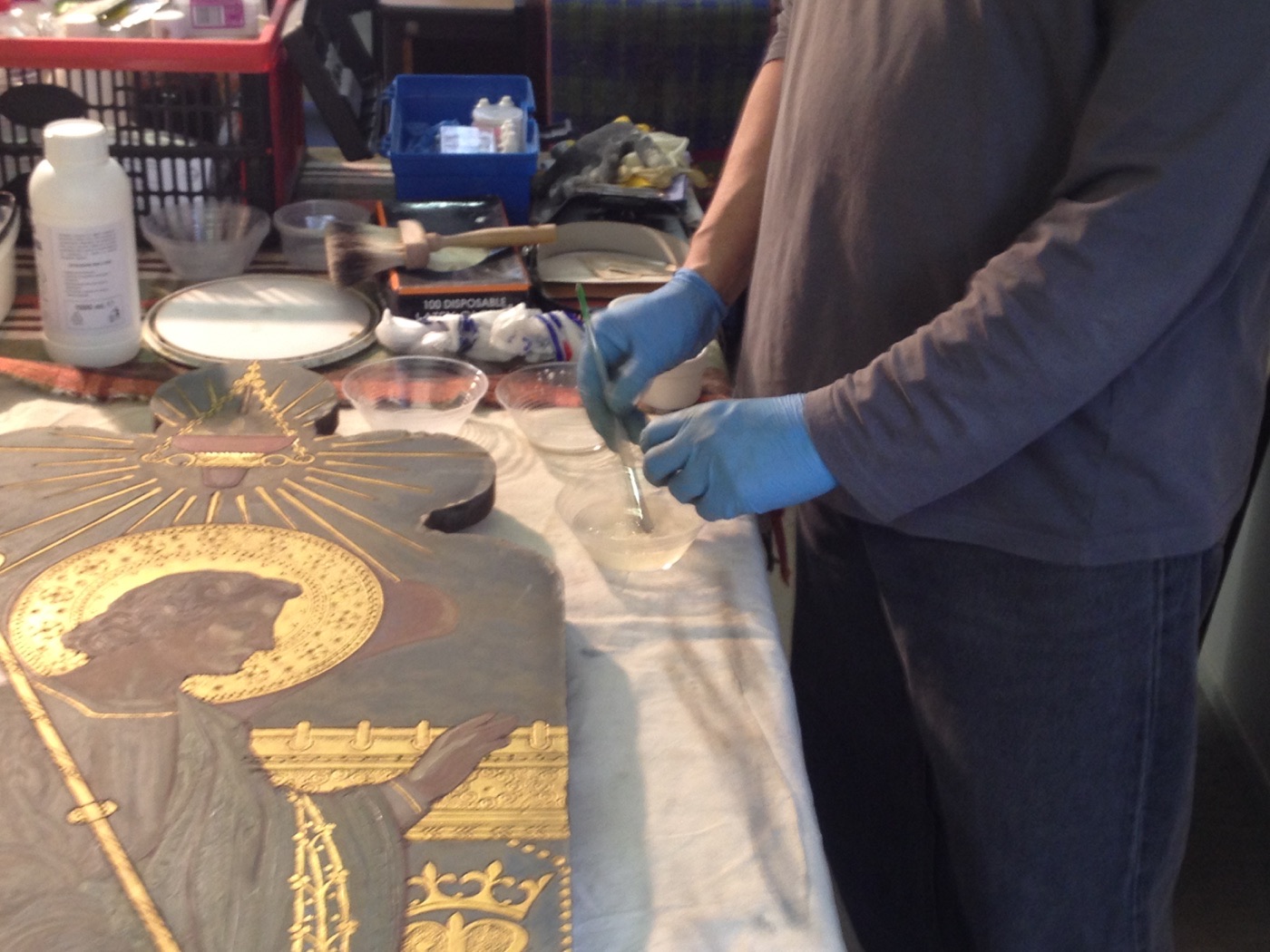
Silvano Cioci Faux preparing a conservation cleaning solution beside the reredos panel 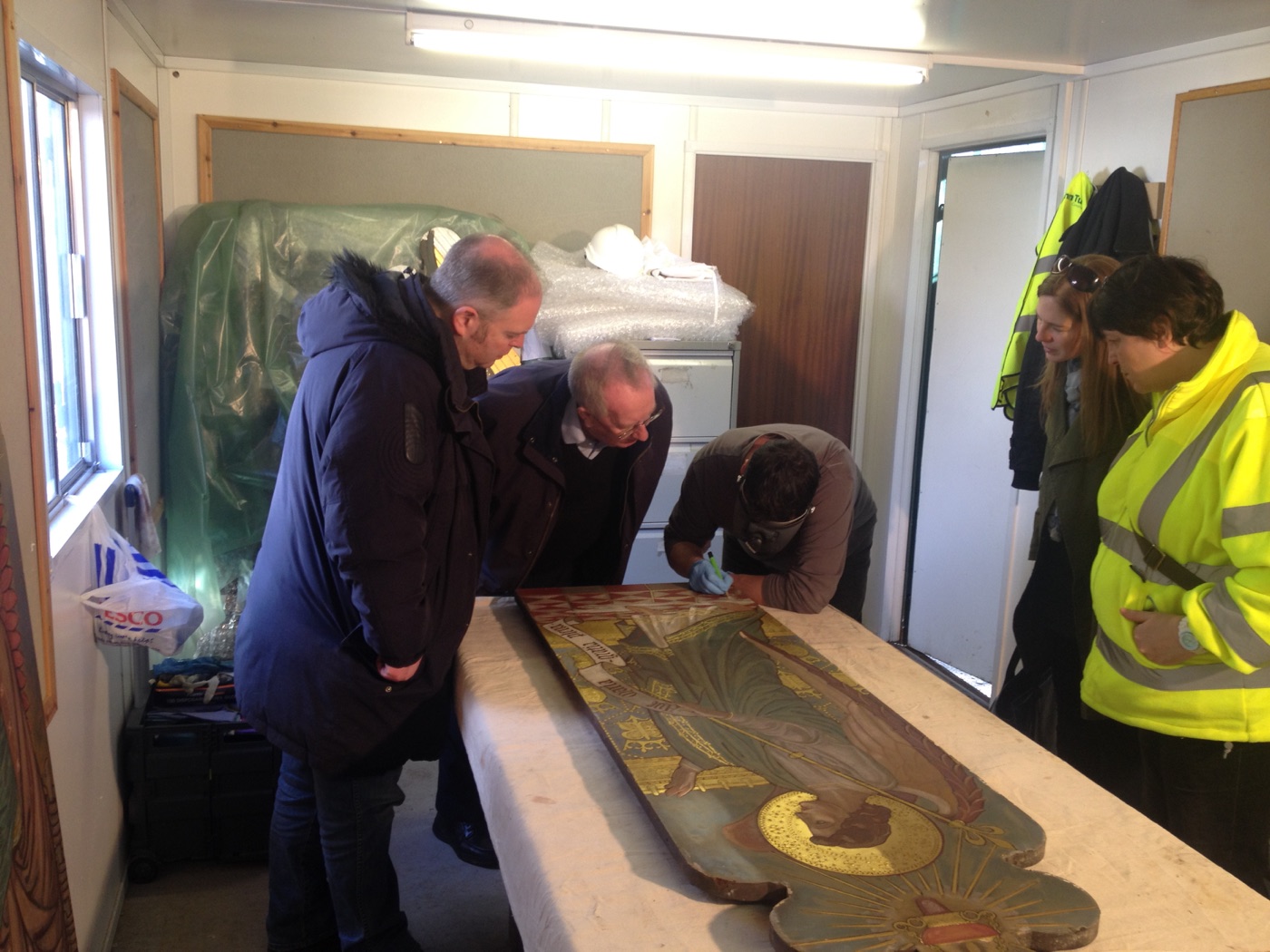
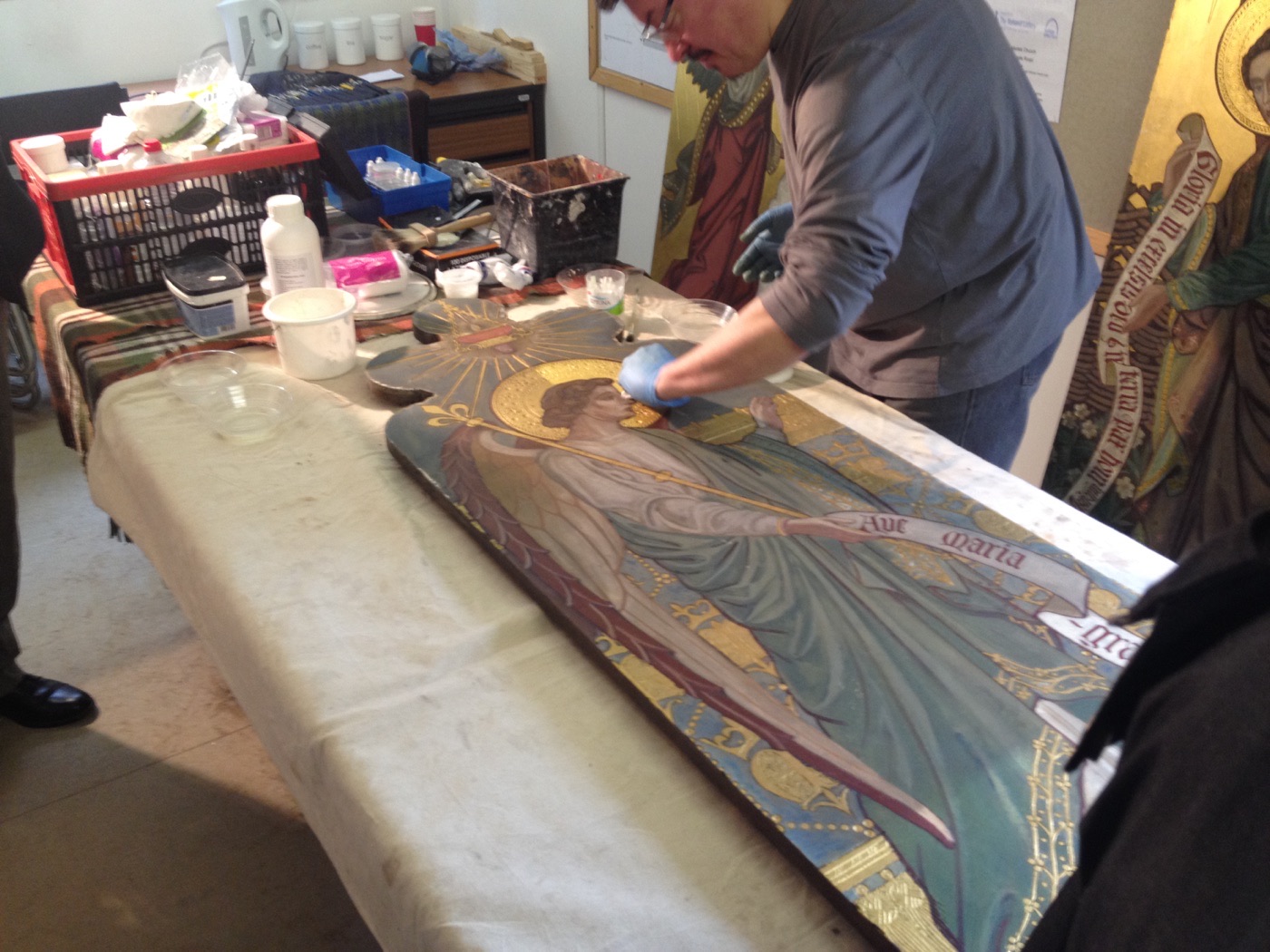
Silvano Cioci Faux cleaning the altar panel with a head mounted magnifier while the workshop group watches
Conservation cleaning on wood panel altar paintings
The Widnes altar scheme had no intact varnish barrier, so decades of dirt sat on the original paint. Cleaning must remove grime without dissolving fragile 19th century layers only microns thick above the wood.
Silvano works in small passes with synthetic saliva (a laboratory formulated equivalent to natural enzymes), conservation liquid soap diluted to strength, and warm water rinses dabbed, never rubbed, between stages. Rubbing lifts paint; dabbing lifts dirt.
On heavily soiled passages he uses a cellulose poultice paste (PPA) for short contact times, watching continuously so the paste does not over clean. The workshop film shows the visible line between cleaned and uncleaned paint, and the cotton swab checks that confirm no paint is coming away.
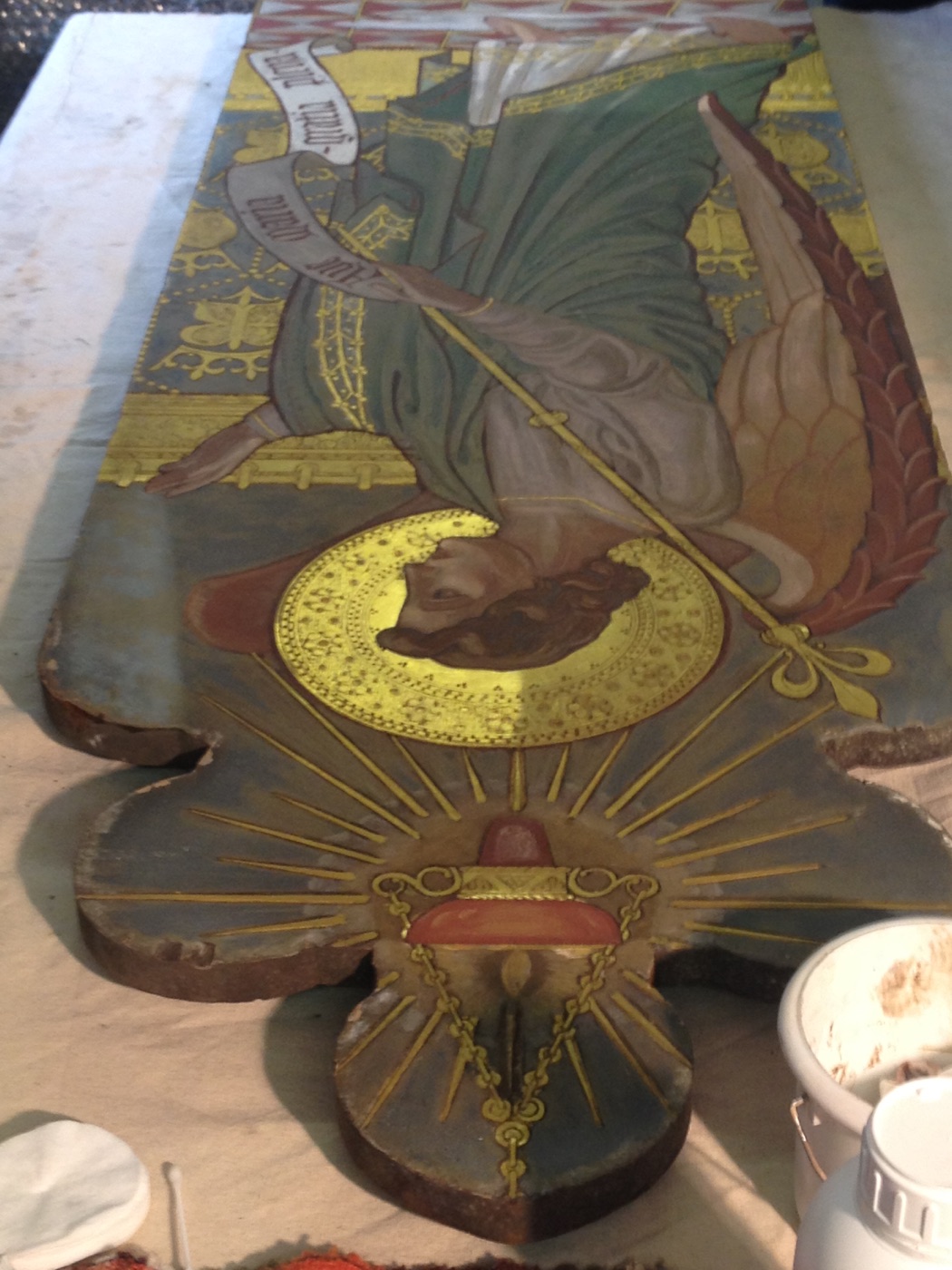

24 carat gold leaf on haloes and lettering
Gilded areas need a different touch from the painted flesh tones. Gold is a soft metal: swabs that pick up a greenish tint mean leaf is being removed, not dirt alone.
A slightly stronger saliva and soap mixture can brighten inscribed scrolls and haloes when applied with the same swab discipline. The goal is legibility for worship and heritage interpretation, not a mirror bright regild.
Minimal intervention and inpainting ethics
Silvano describes two schools of thought in painting restoration: make everything look factory fresh, or preserve age. On St Marie's he chose the latter except where the image failed to read.
Damp conditions had flaked paint from several panels. Rather than repainting large losses, he consolidated and inpainted only where the story broke down, notably the face where cleaning revealed an earlier mouth repositioned by the original artist, and local losses in the hair.
That philosophy keeps the panels credible as 19th century church art. Full repainting would turn heritage objects into modern copies and hide the artist's original layers.
Removable varnish and safe reinstallation
Because earlier campaigns skipped a final varnish, Silvano planned a removable conservation varnish once inpainting had dried. That gives the paint a sacrificial layer future conservators can strip with dirt, rather than repeating aggressive cleaning on the original.
He returned to site for hanging the panels on the altar, aligning fixings and handling so scaffold and building dust did not undo the studio work. Parish film and photography from Halton & St Helens VCA capture both the workshop education programme and the craft behind the HLF redevelopment.
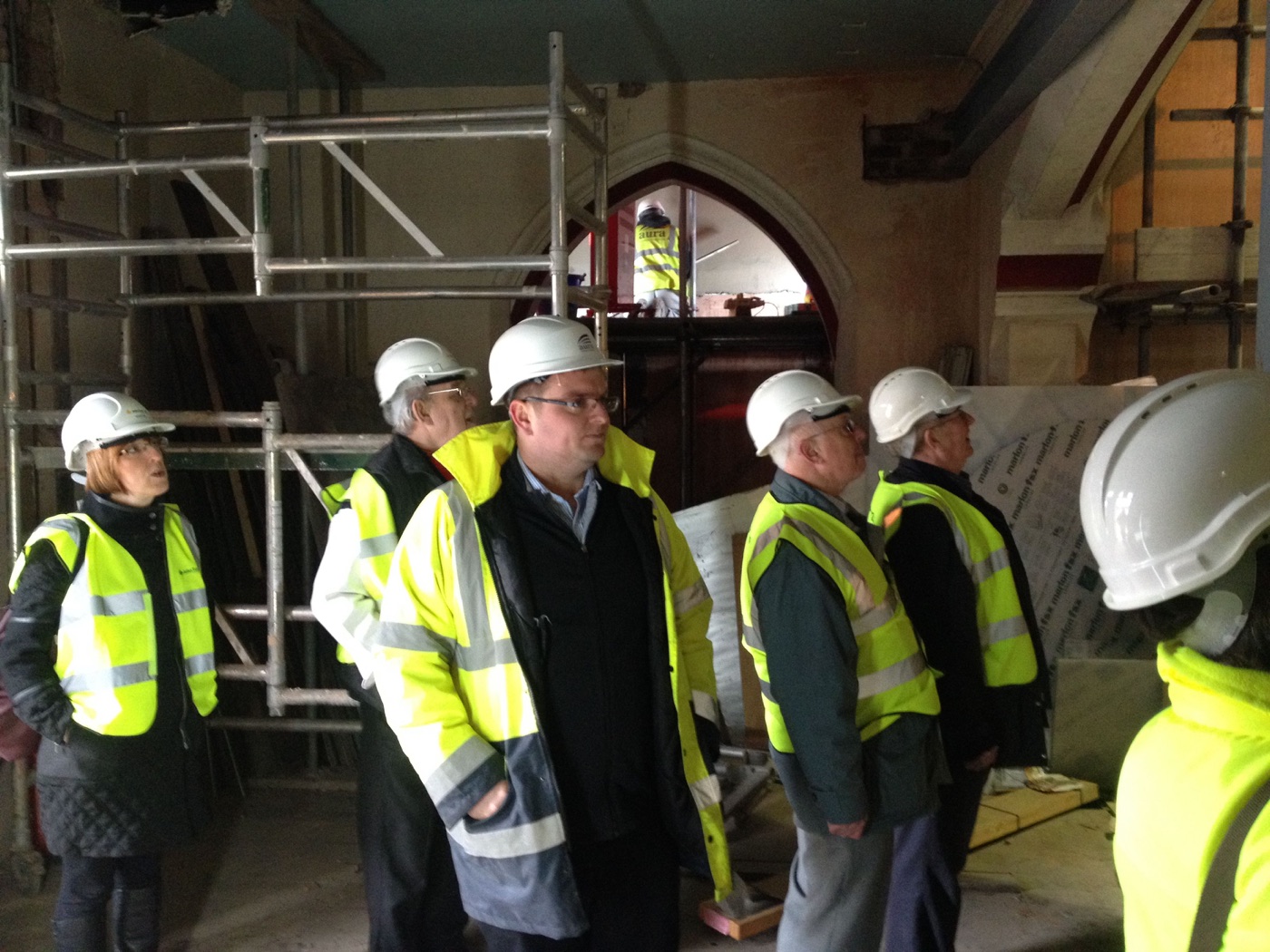
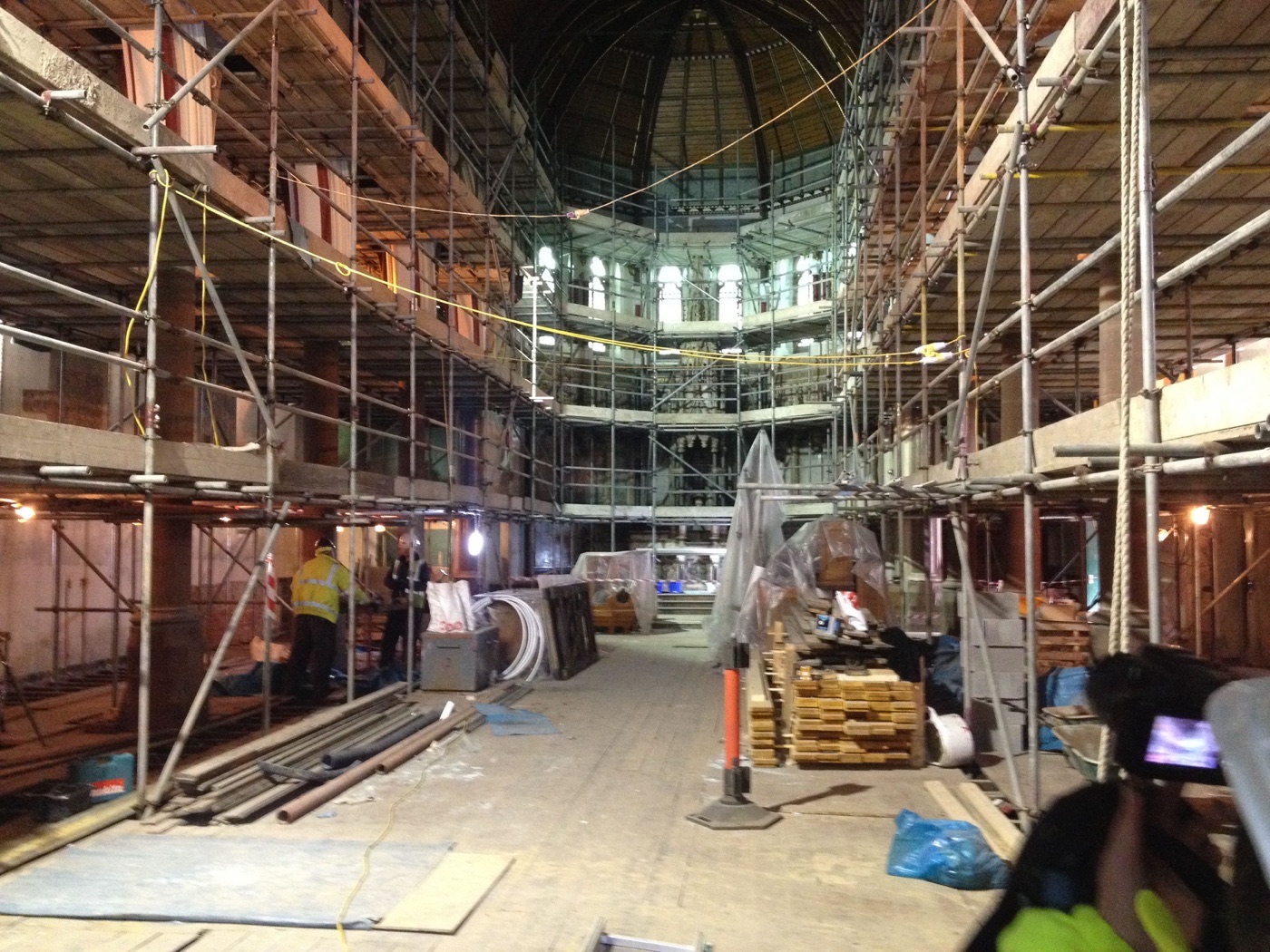
Heritage workshop attendees in hi vis vests touring the church interior during building works 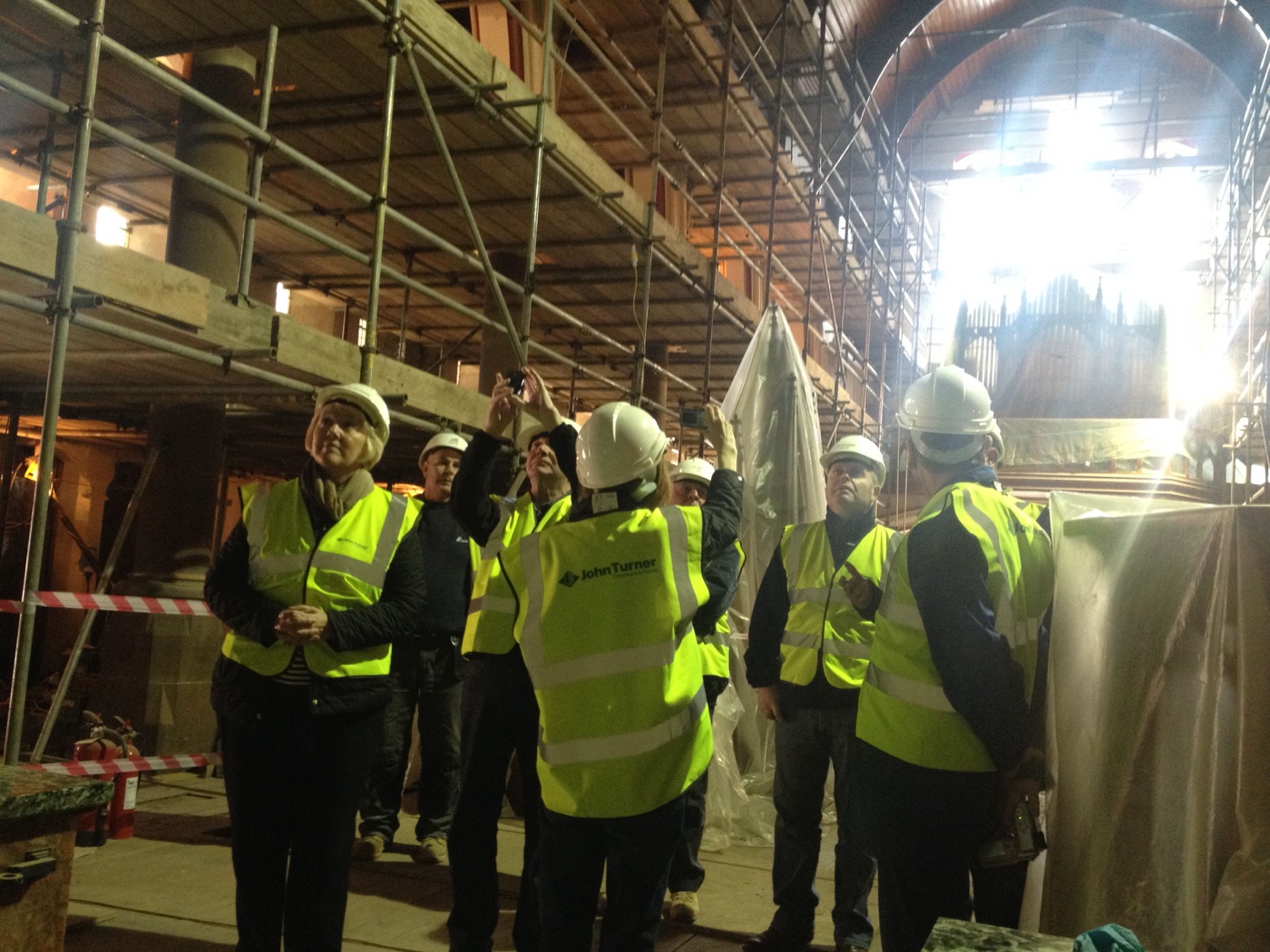
Heritage workshop group in hard hats viewing St Marie's nave and organ through scaffolding
Meet Silvano (March 2014 interview)
In the parish film Workshops: Meet Silvano, Silvano describes his role on the St Marie's redevelopment: bringing late 1800s panel paintings back from a poor state, stage by stage, until they can read clearly on the altar again.
He talks about training in Urbino, where the art academy grew out of Renaissance craft traditions, and why restoration feels personal: each painting is studied, documented, and cared for until it feels part of the restorer's own story.
Asked about other English work he is proud of, he cites decorative restoration on the stair approach to the concert hall at St George's Hall, Liverpool, and uncovering historic stencilling at St Francis de Sales that had been hidden under eggshell paint, restored within the budget the Archdiocese could fund so worshippers could see what the church once looked like.
He explains why covering murals or stencils with generic paint layers destroys historic value, and why he welcomes HLF workshop days (as he has also done with school groups at Holy Family, Crewe): the finished painting is what most people see, not the slow, specialist work underneath.
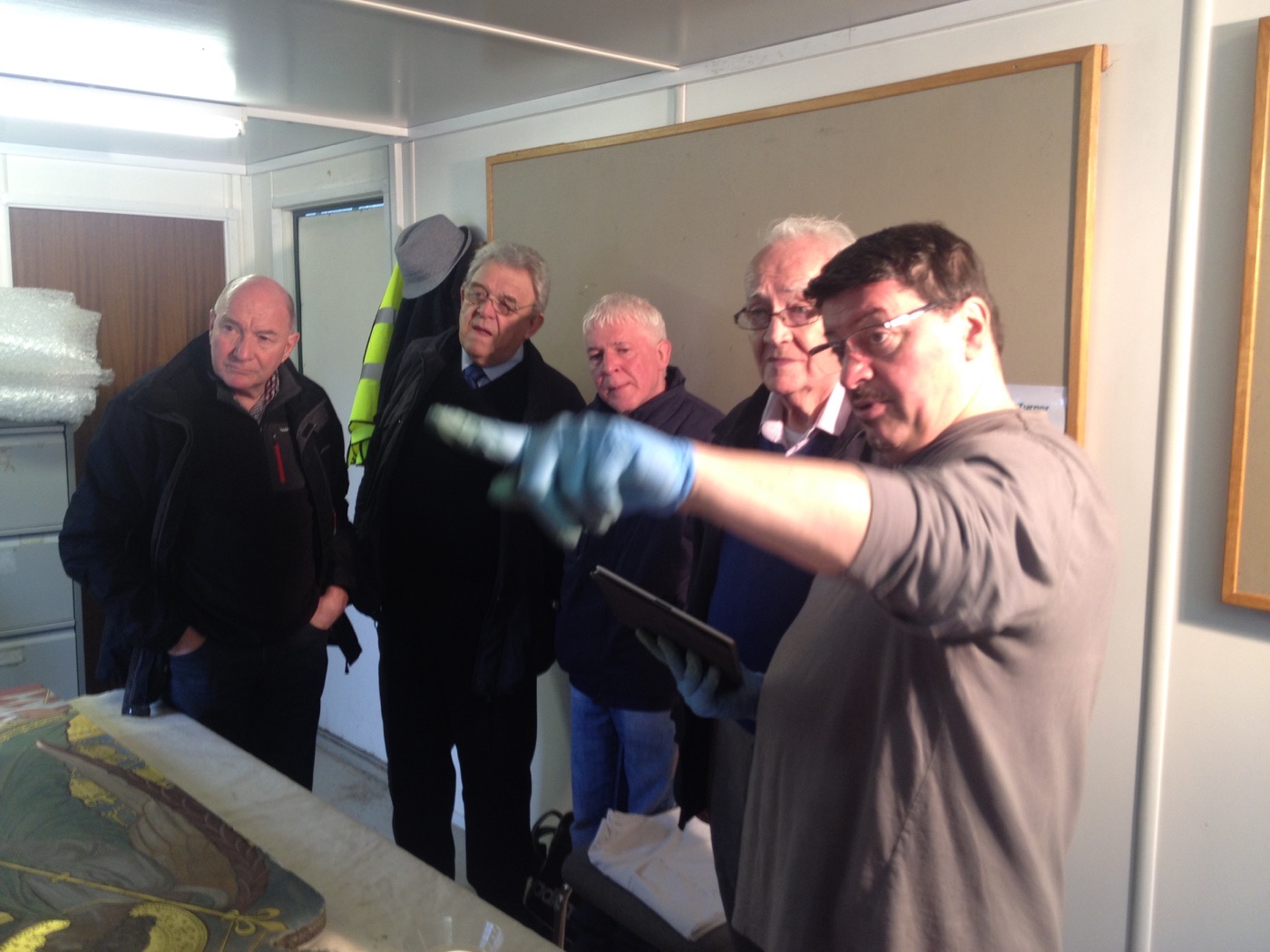
Silvano Cioci Faux explaining restoration to workshop attendees beside the altar panel 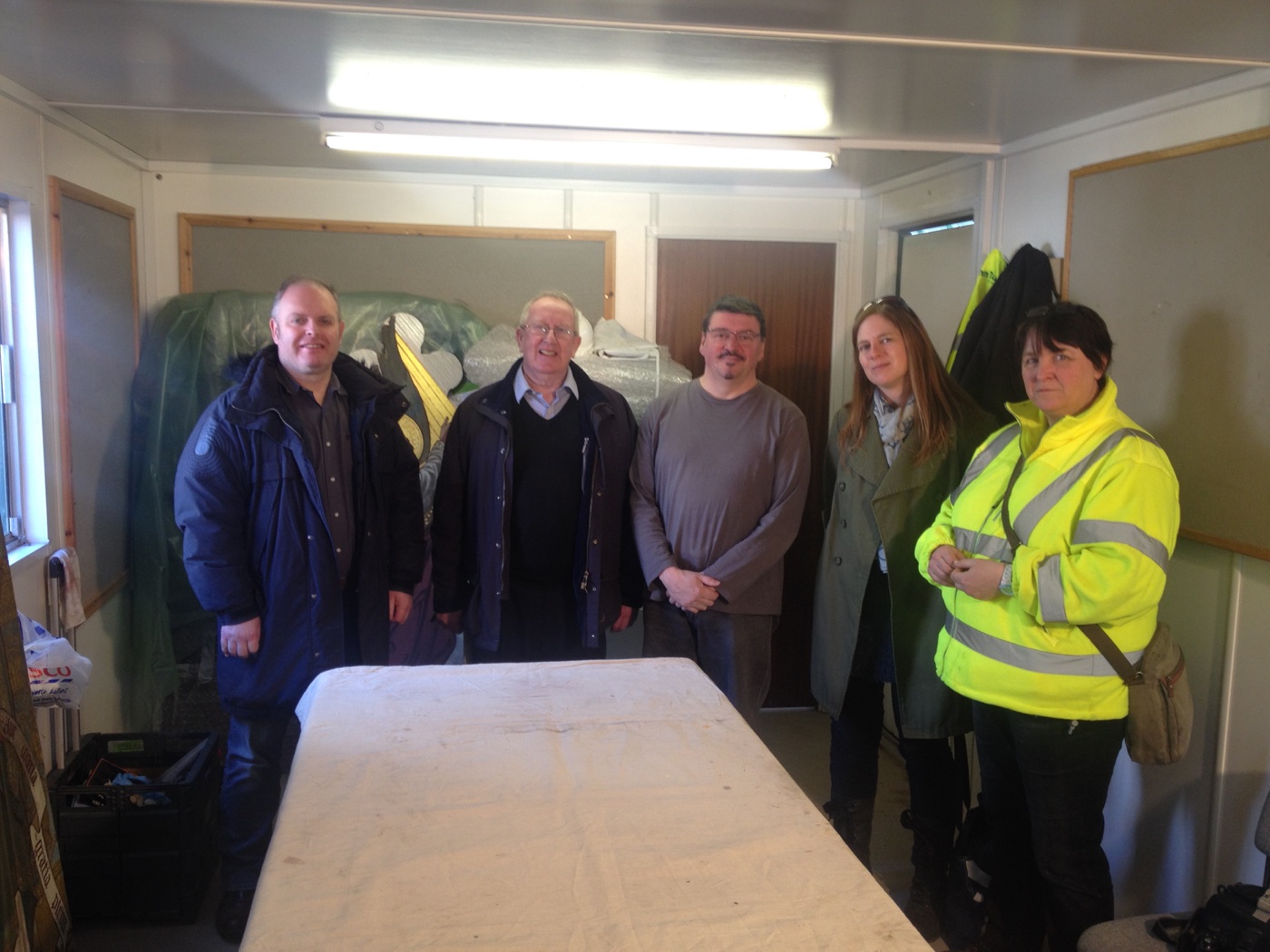
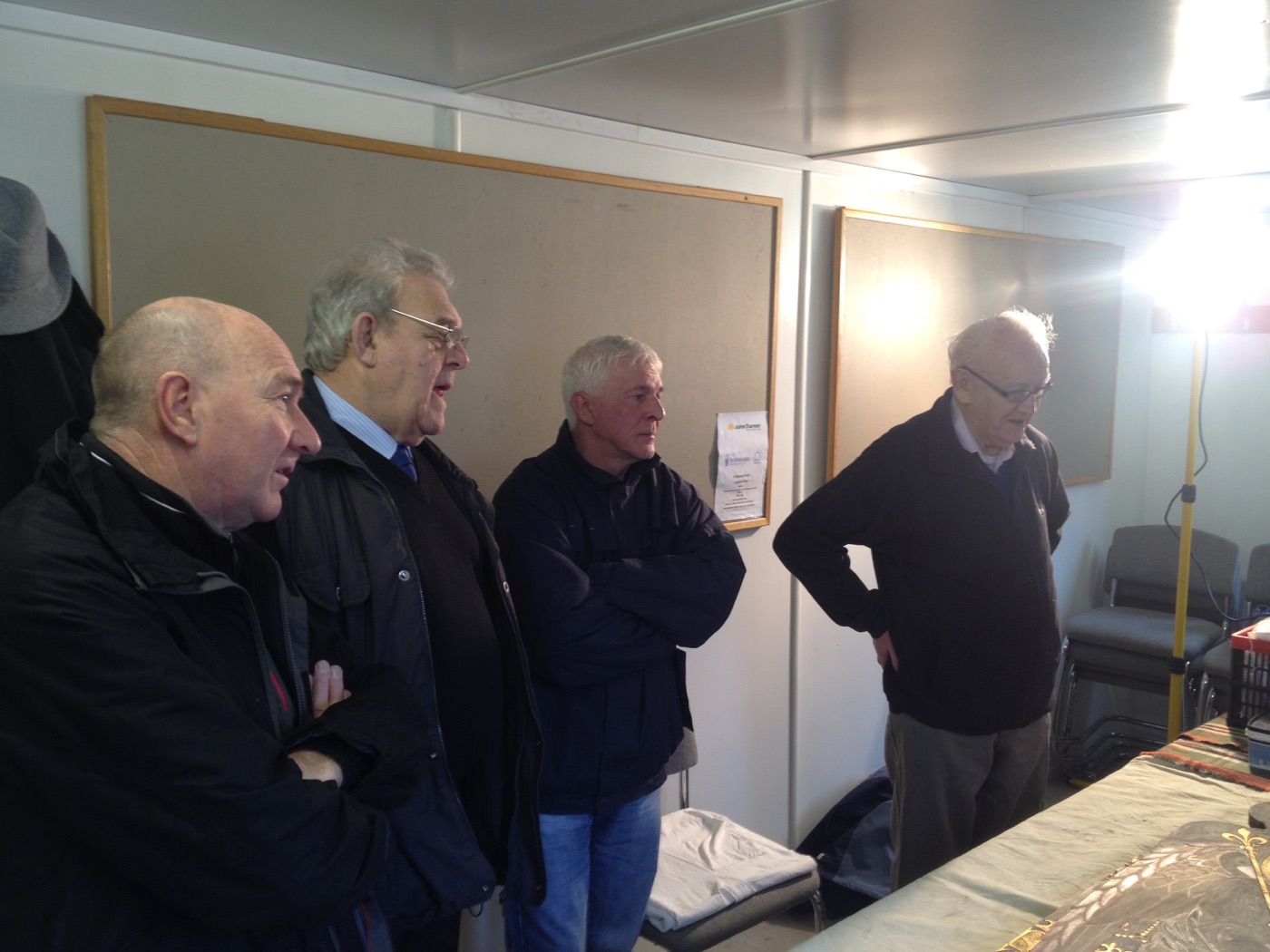
Silvano Cioci Faux with workshop attendees standing behind the table in the site office 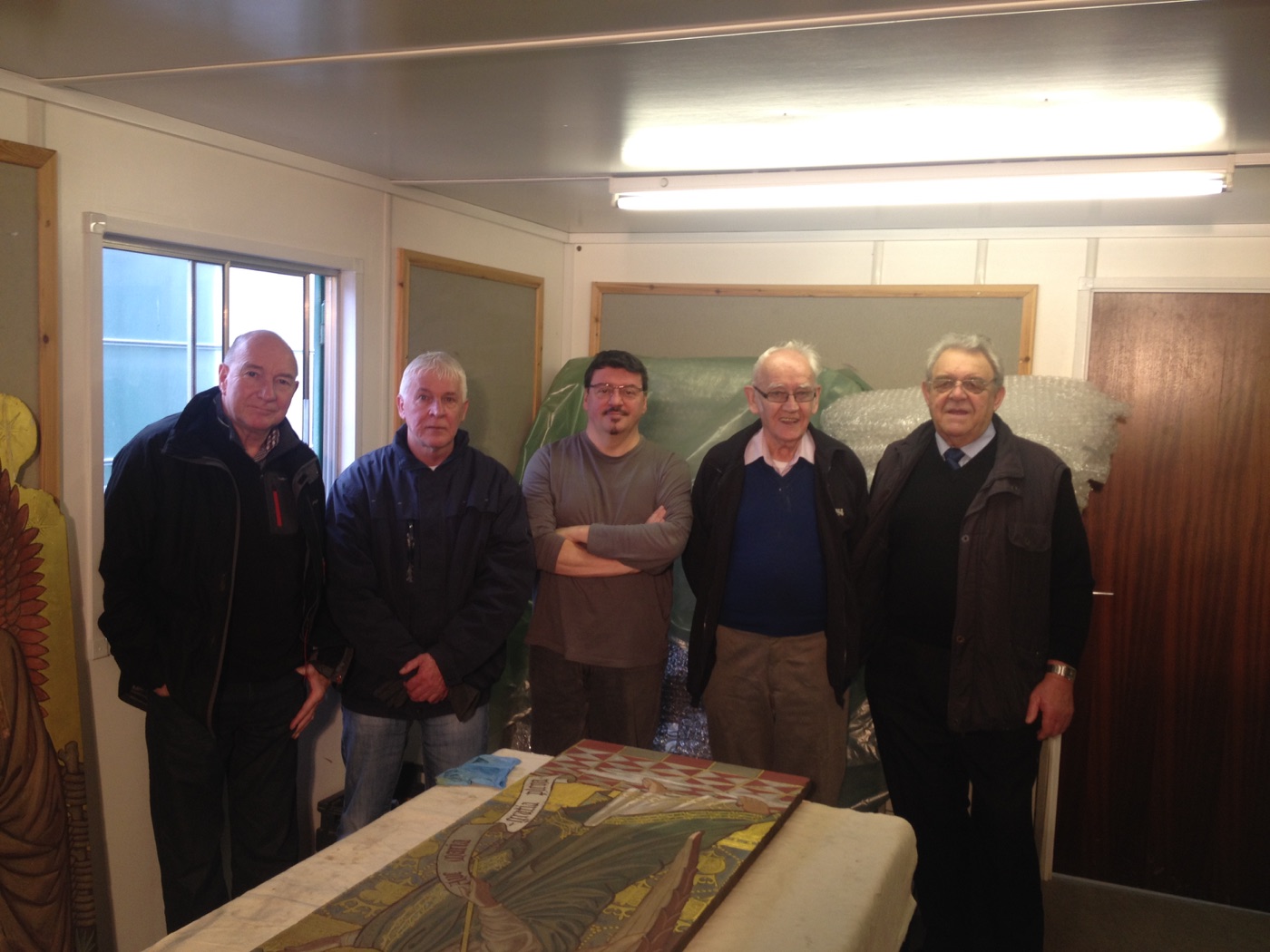
Silvano Cioci Faux standing with workshop visitors behind the altar panel on the table 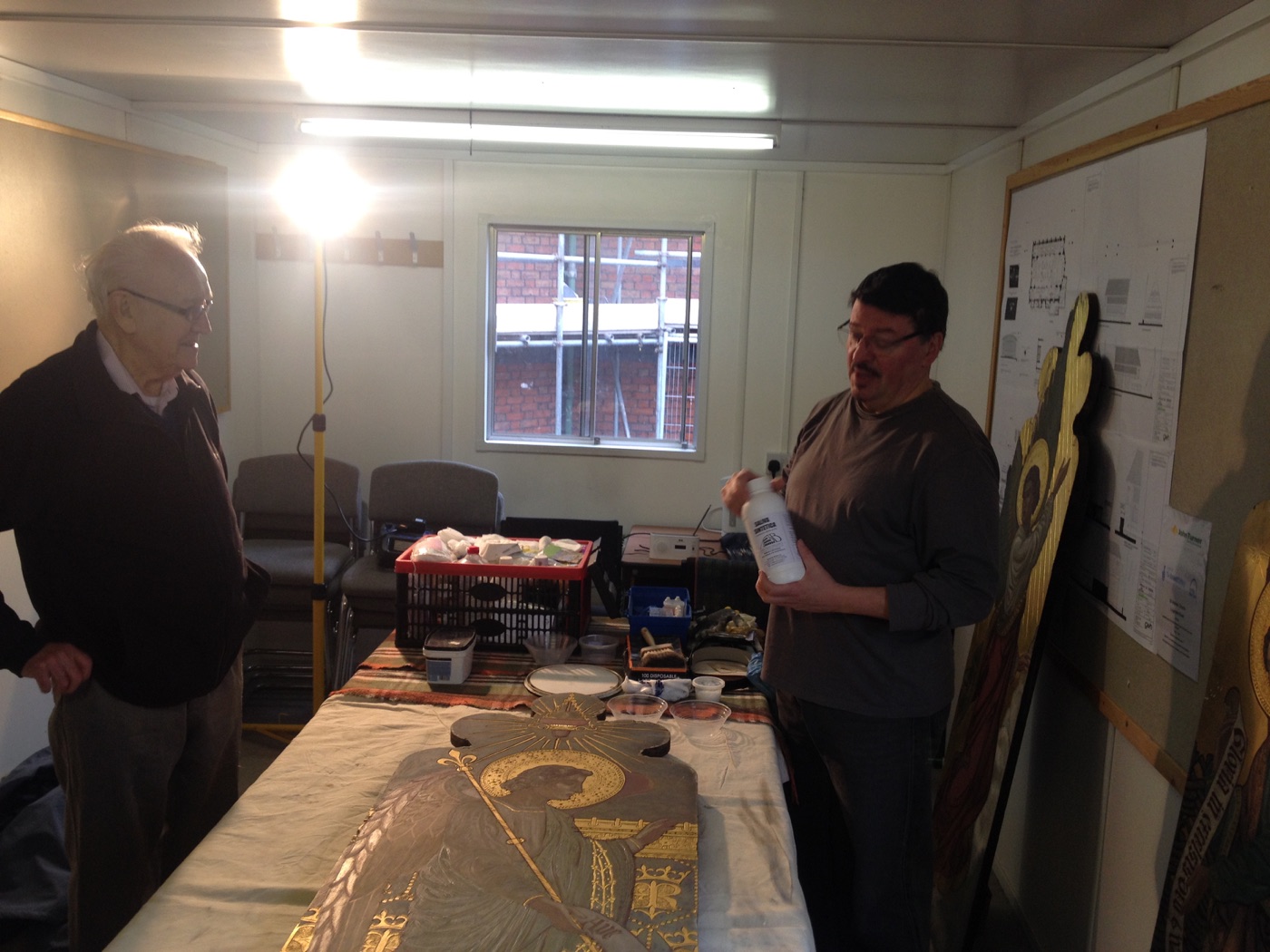
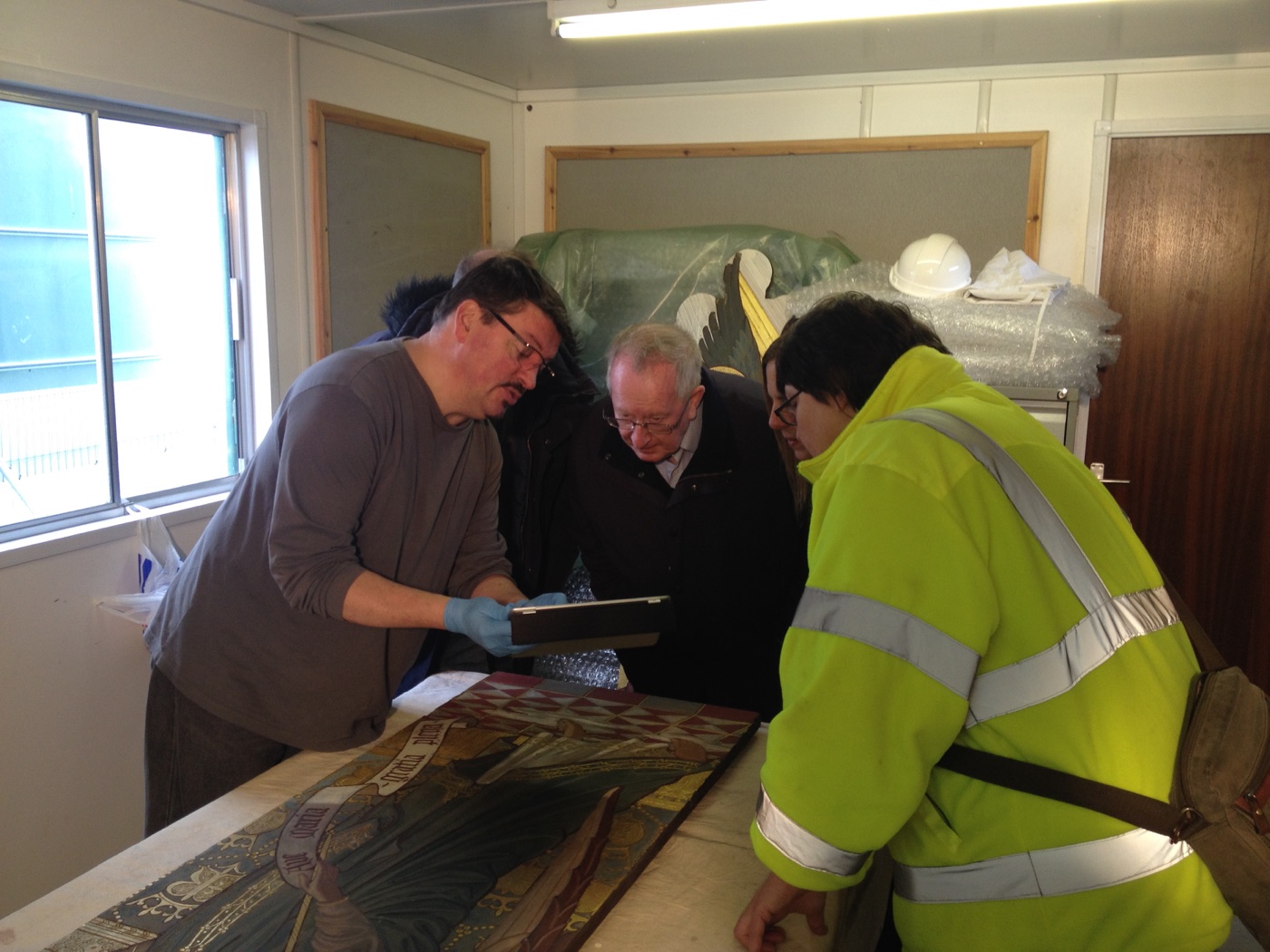
Silvano Cioci Faux holding a conservation product while explaining the process to a visitor 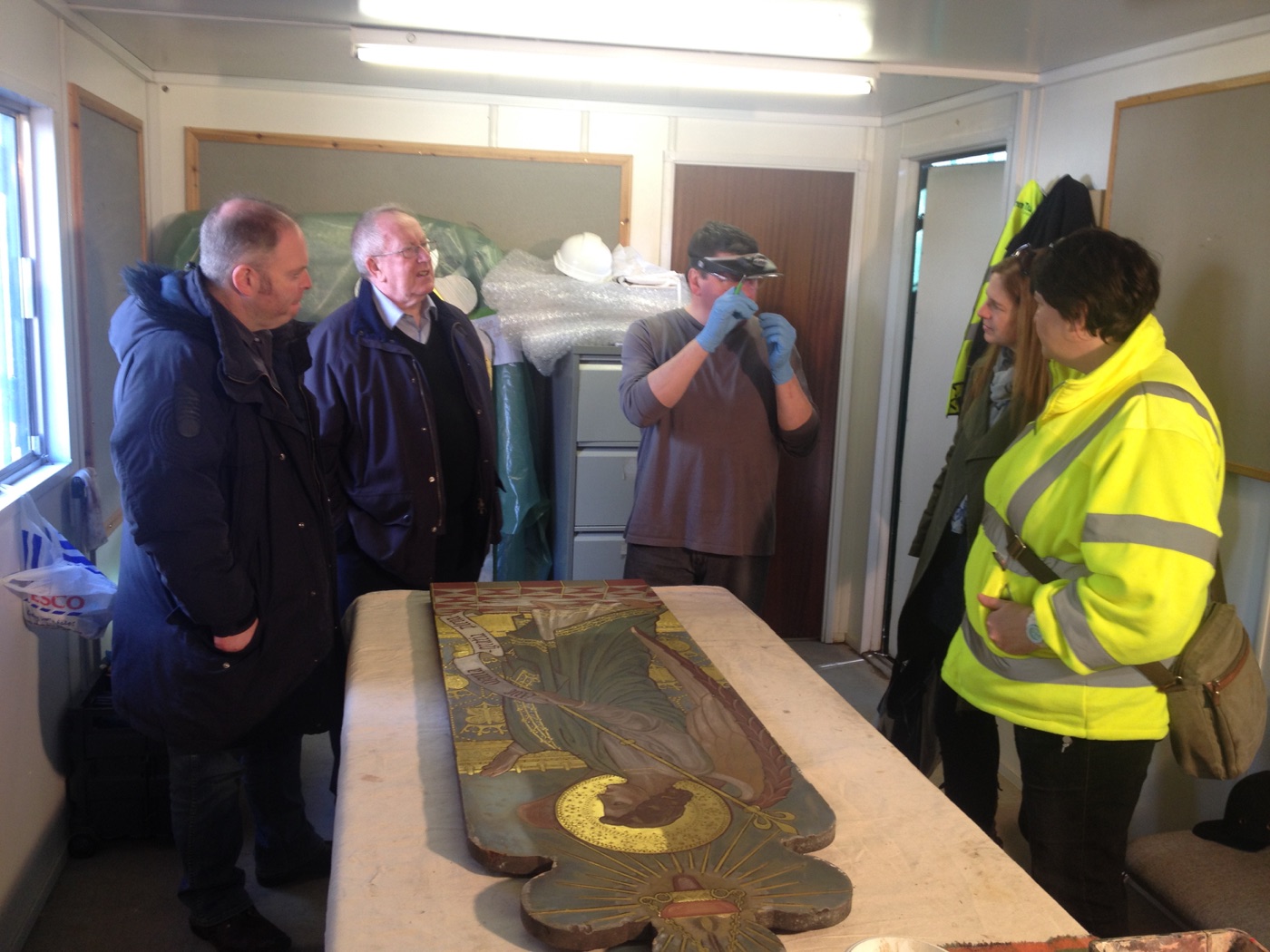
Workshop visitors gathered around the Gabriel panel while Silvano stands by with a magnifying visor 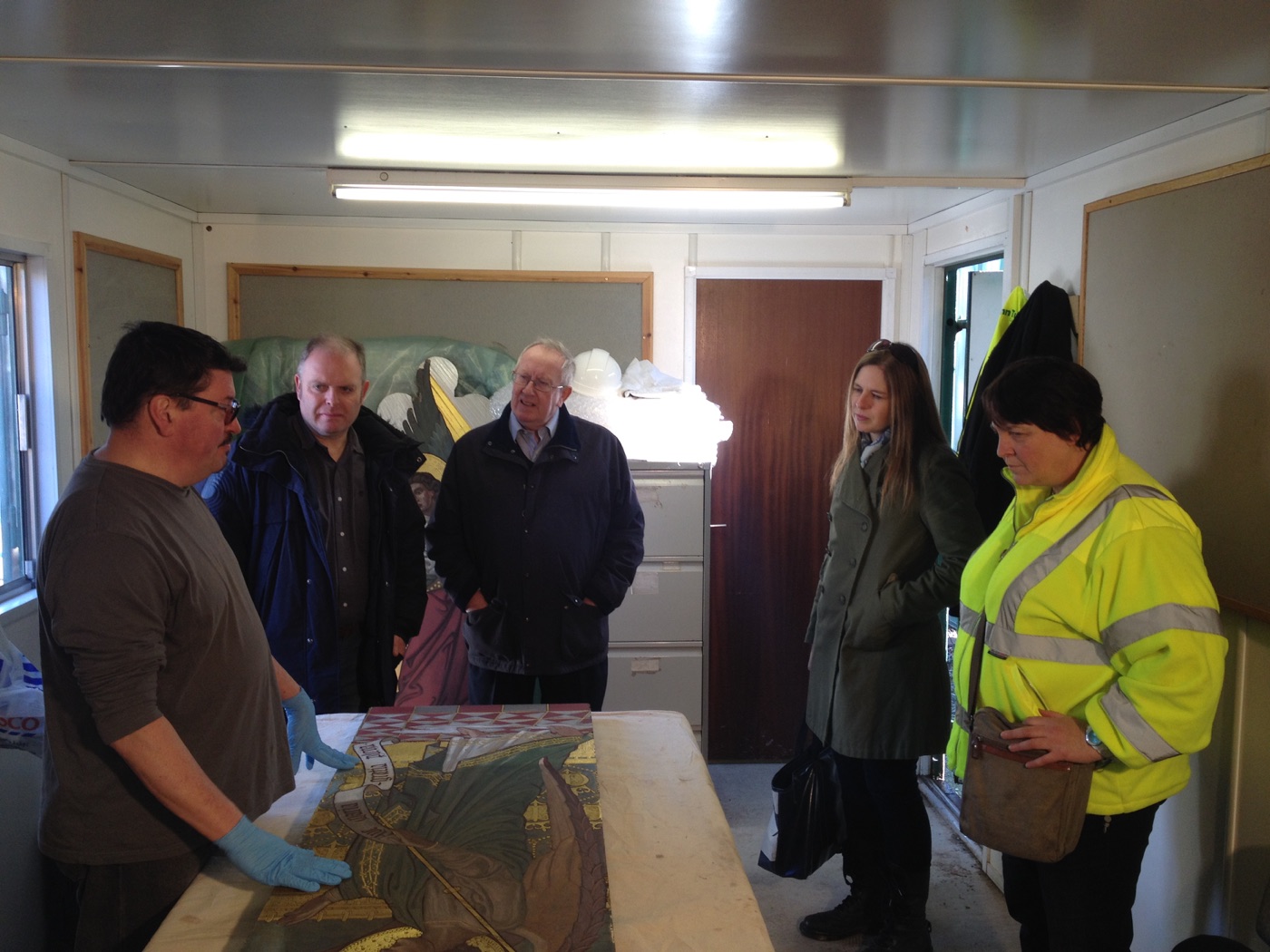
Silvano Cioci Faux explaining the panel restoration to workshop attendees wearing conservation gloves

Outcome
- Altar paintings read clearly again in natural light, with gold haloes and inscribed scrolls visible after decades of embedded dirt.
- Treatment respected Silvano's minimal intervention approach: panels keep their history rather than looking newly repainted.
- Workshop feedback recorded by the Heritage Group showed stronger local interest in the building and conservation craft.
- The St Marie's archive (360 tour, event programme and photography) continues to tell the HLF story alongside later parish conservation such as the Pieta restoration.
Official site: St Marie's Church, Widnes
Further reading
Similar project?
Browse more case studies or portfolio photography.