
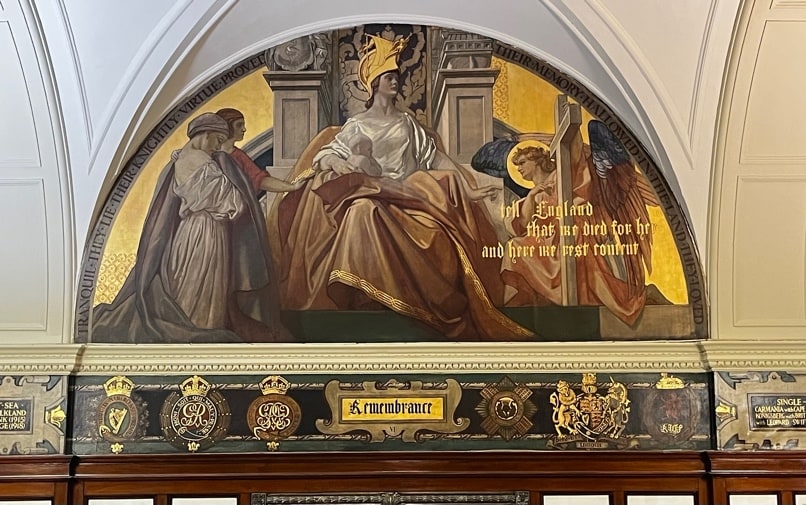

This report details the conservation treatment undertaken on two marouflage paintings and associated decorative friezes in the Hall of Remembrance, Liverpool Town Hall, following water ingress and subsequent deterioration of the painted surfaces.
The objectives were to assess condition after the water damage incident, remove surface contamination, improve visual legibility of the painted scheme, and preserve the maximum amount of original material while adhering to minimal intervention and reversibility.
This case study covers the Hall of Remembrance marouflage only. Decorative repair at St Georges Hall Liverpool, including bevelled faux granite and scumble glaze, is a separate civic programme by the same studio and is shown in our gilding and faux finishes portfolio.
Wide view of marouflage murals in the Hall of Remembrance, Liverpool Town Hall 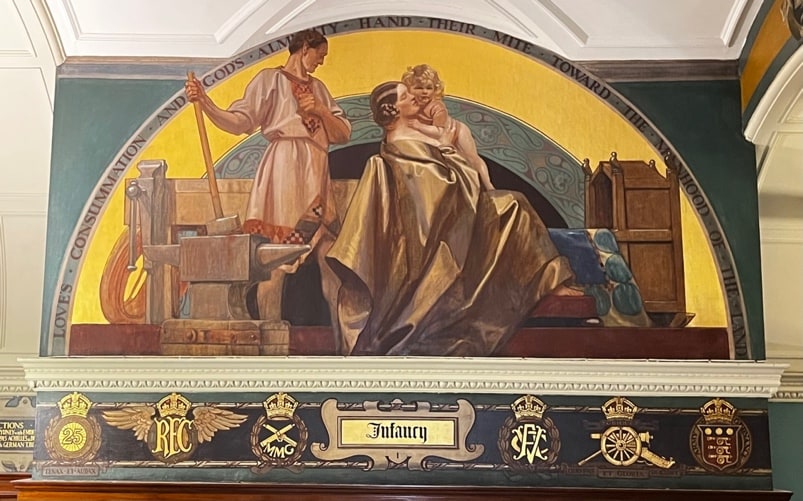
Infancy marouflage mural in the Hall of Remembrance, Liverpool Town Hall
Condition assessment
A detailed condition assessment was undertaken prior to treatment. The marouflage paintings and decorative friezes exhibited water related staining and surface soiling resulting from water ingress into the Hall of Remembrance.
The water ingress and associated surface contamination had accentuated the visibility of these pre existing abrasions. Despite the effects of water ingress, the paint layers were found to be stable, with no active flaking, lifting, blistering or detachment observed, so no consolidation treatment was required.
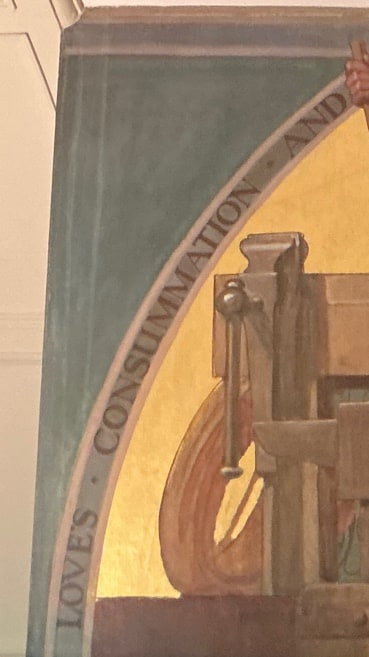
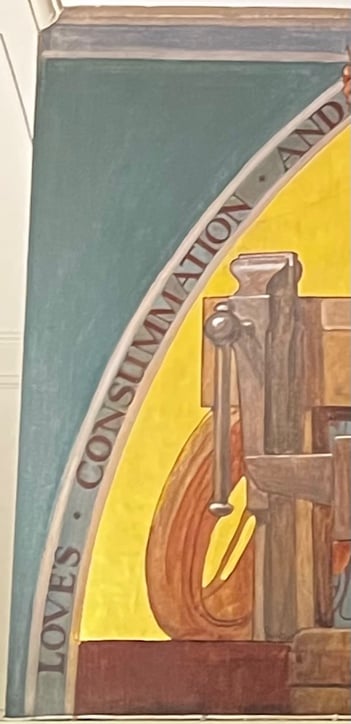
Love's Consummation anvil before and after cleaning
Surface soiling on the anvil in the Love's Consummation mural. Drag the handle to reveal the same passage after cleaning.
Drag the gold handle right to reveal the after image.
Before: Soiled anvil and Love's Consummation lettering before cleaning, Hall of Remembrance. After: Same Love's Consummation anvil and lettering after surface cleaning.
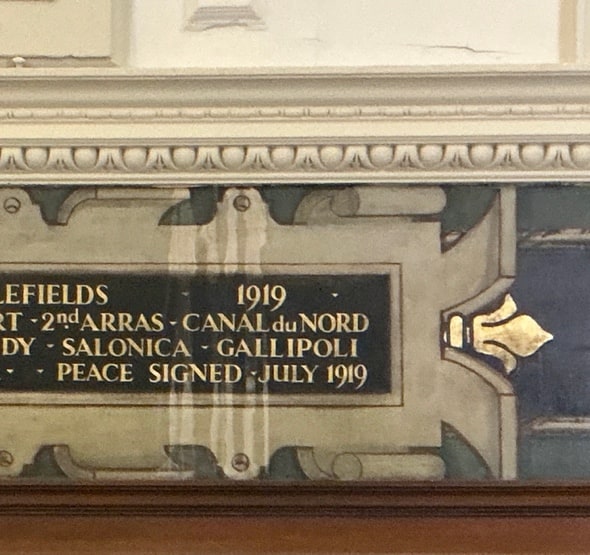
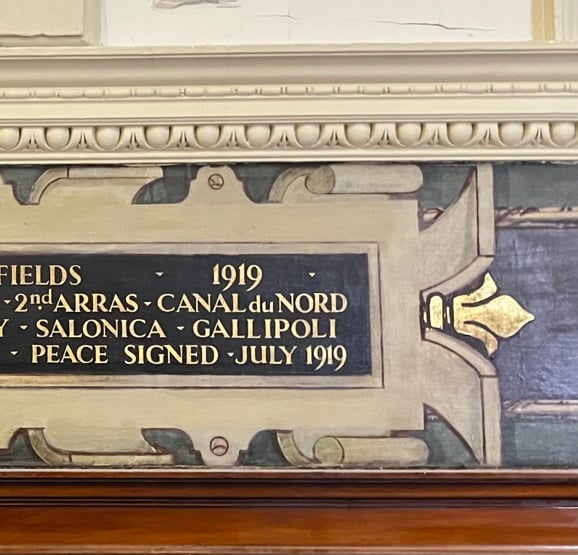
Battle honours panel during cleaning and after treatment
A cleaning test on the Peace signed July 1919 panel, with white streaks still on the paint. Drag the handle to reveal the same panel after treatment.
Drag the gold handle right to reveal the after image.
Before: Battle honours panel during a cleaning test, with white streaks across the lettering. After: Same Peace signed July 1919 battle honours panel after treatment.
Historic over cleaning
During preliminary cleaning tests, areas of paint abrasion became apparent. Examination indicated that these abrasions were not directly caused by the recent water damage but were the result of excessive cleaning during a previous conservation campaign, which had reduced the thickness of the original paint layer in certain areas.
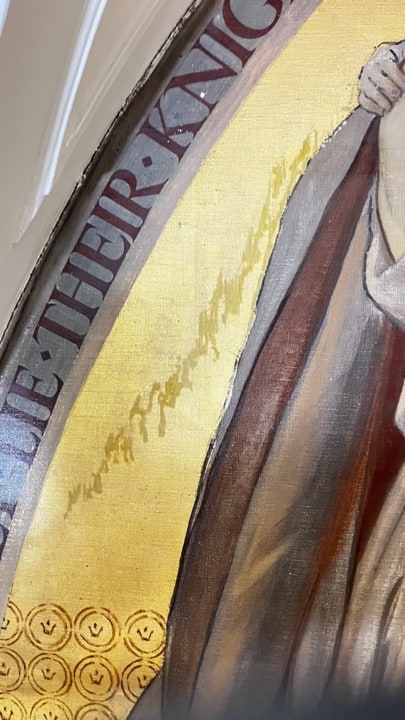
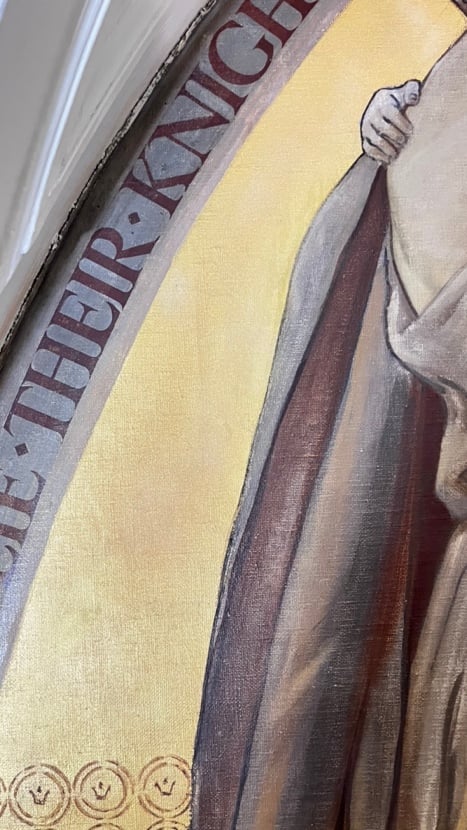
Their Knight: paint loss before and after reintegration
Jagged losses in the gold ground beside the Their Knight lettering, left by an earlier over cleaning. Drag the handle to reveal the same passage after selective reintegration.
Drag the gold handle right to reveal the after image.
Before: Their Knight marouflage detail with jagged paint loss in the gold ground beside the lettering. After: Same Their Knight detail after reintegration, with the gold ground restored beside the lettering and drapery.
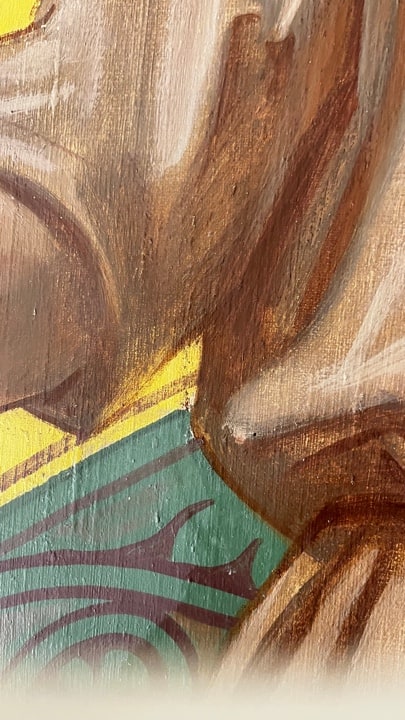 Before
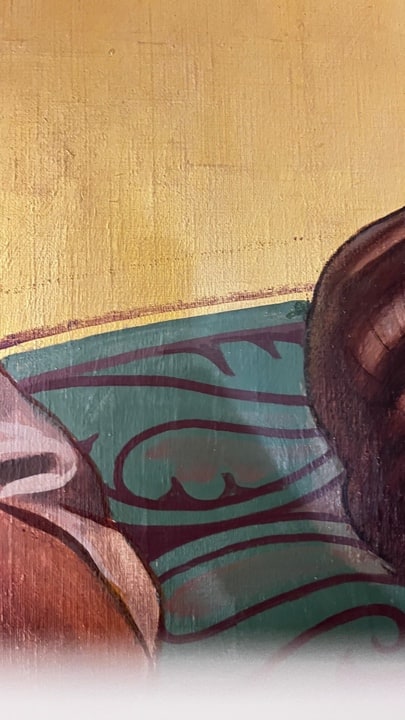 After
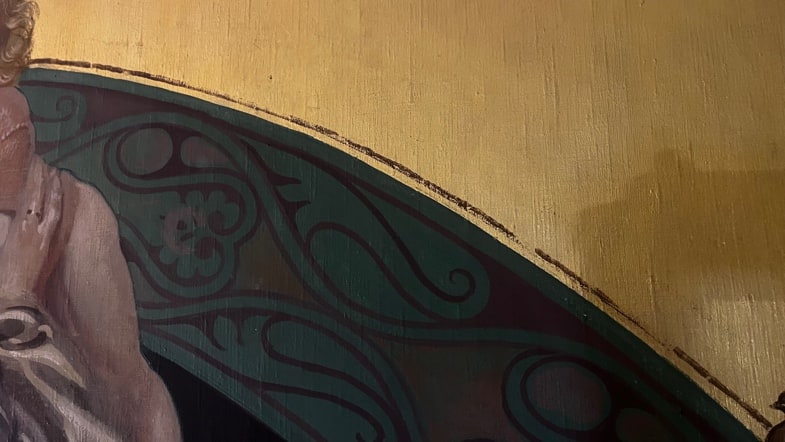
Abraded scroll before and after reintegration
Thinned paint where the gold ground meets a teal scroll, and a wider view of the same passage after reintegration. These are different photographs, so they are shown side by side.
Conservation treatment
Treatment commenced with full photographic documentation and condition recording of all affected areas.
Surface cleaning was undertaken using a conservation grade pH neutral soap at a 5% concentration in odourless mineral spirits (OMS), applied in a controlled manner to remove accumulated surface dirt, grime and residues associated with the water damage incident. Particular care was exercised in areas where previous over cleaning had weakened the original paint surface.
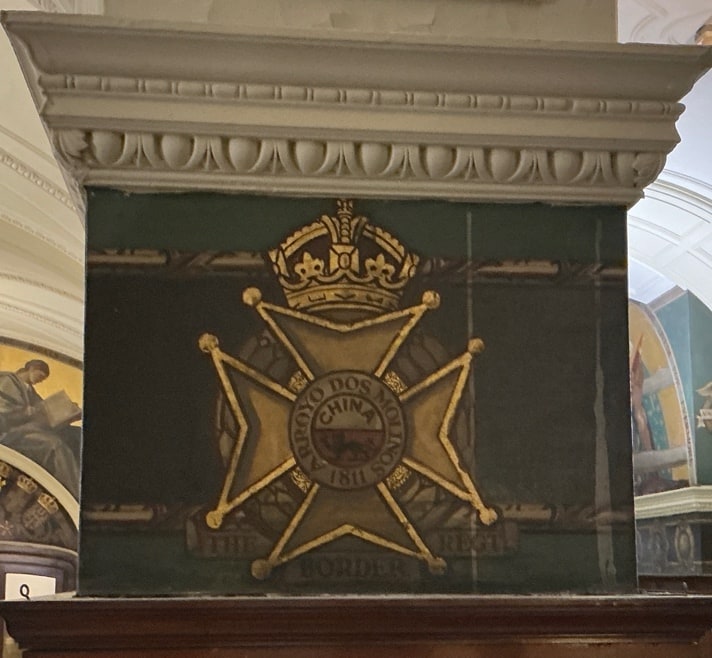
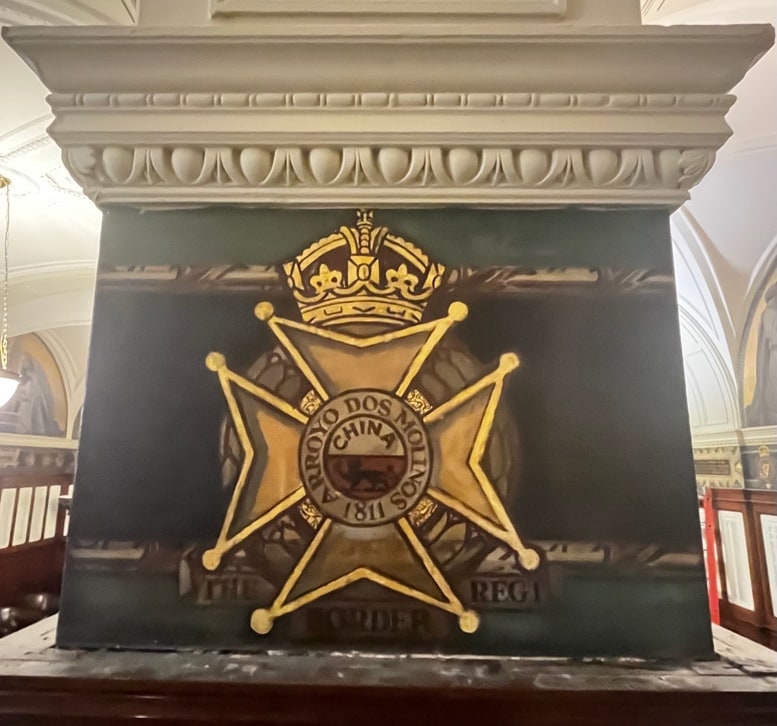
Border Regiment crest before and after treatment
The Border Regiment crest dulled by soiling and water streaks. Drag the handle to reveal the same crest after cleaning.
Drag the gold handle right to reveal the after image.
Before: Border Regiment crest before treatment, with dull gold and vertical water streaks. After: Same Border Regiment crest after cleaning, with brighter gold and the streaks reduced.
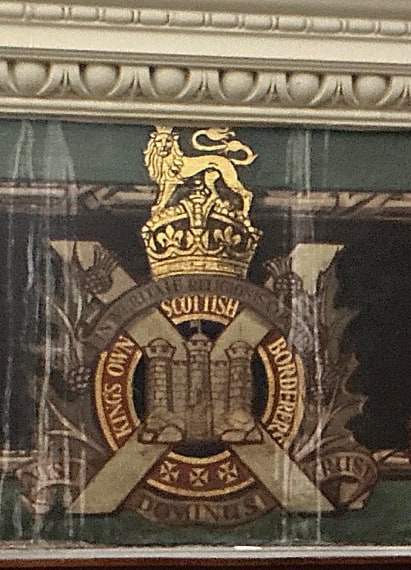
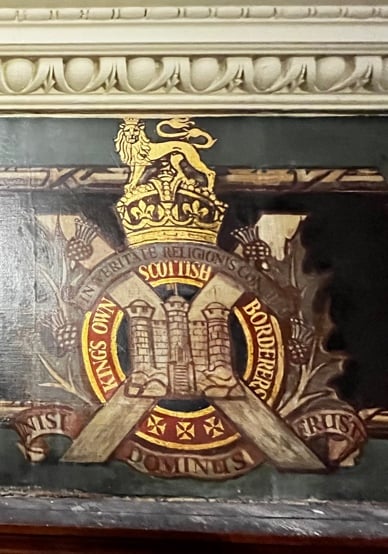
King's Own Scottish Borderers crest after cleaning and when finished
Water runs still crossing the King's Own Scottish Borderers crest after surface cleaning. Drag the handle to reveal the same crest once the frieze was finished.
Drag the gold handle right to reveal the after image.
Before: King's Own Scottish Borderers crest with vertical water runs still visible after surface cleaning. After: Same King's Own Scottish Borderers crest on the finished Hall of Remembrance frieze.
Visual reintegration
Following cleaning and assessment, areas of paint abrasion were evaluated for their visual impact and suitability for retouching. Visual reintegration was undertaken selectively and only where losses disrupted the legibility and aesthetic unity of the compositions. Not all abrasions were treated; some were intentionally left visible to preserve evidence of the artworks' conservation history.
Inpainting was undertaken using Paraloid B 72 prepared as a 20% (w/v) solution in a 1:1 mixture of acetone and industrial methylated spirits (IMS), combined with conservation grade pigments. Retouching was carried out using glazing, tratteggio and punteggio techniques so that intervention remains distinguishable upon close examination.
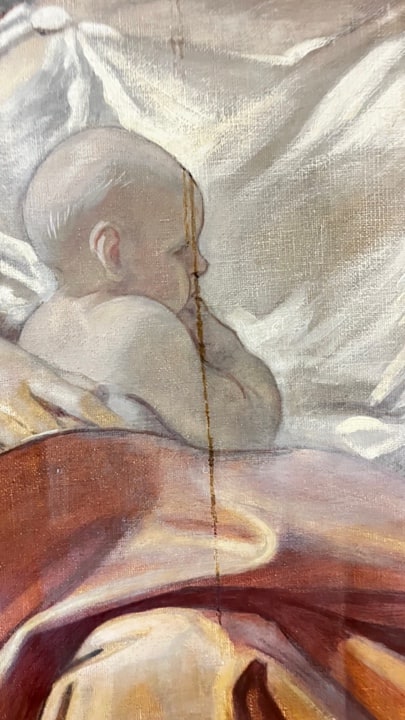
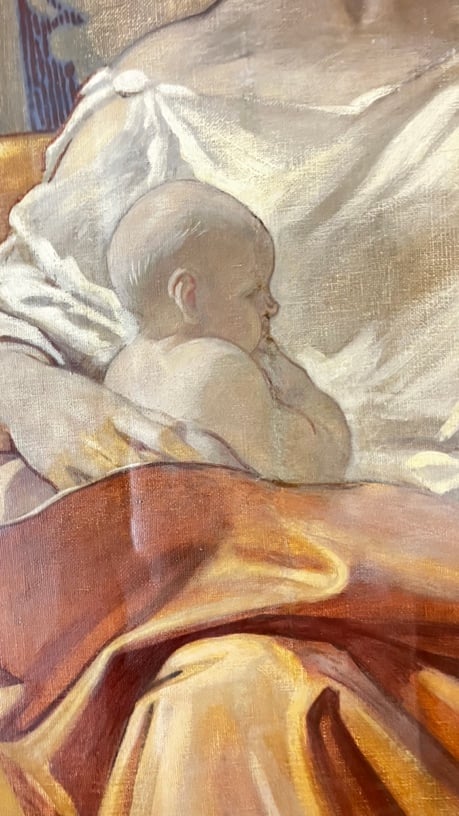
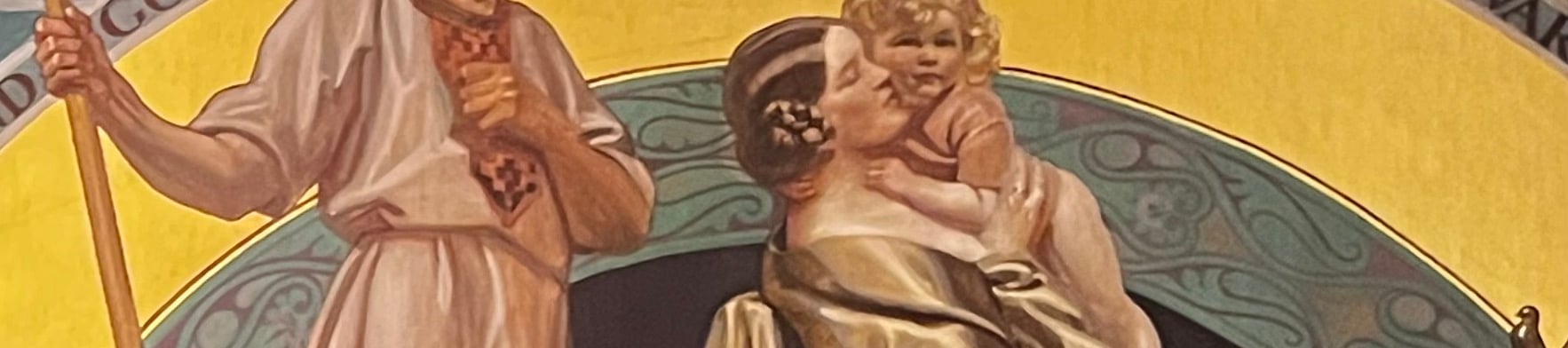
Infancy mural infant during inpainting and after
A loss running through the infant on the Infancy mural during inpainting. Drag the handle to reveal the same figure after that loss was reintegrated.
Drag the gold handle right to reveal the after image.
Before: Infant on the Infancy mural during inpainting, with a loss running through the figure. After: Same infant on the Infancy mural after the loss was reintegrated.
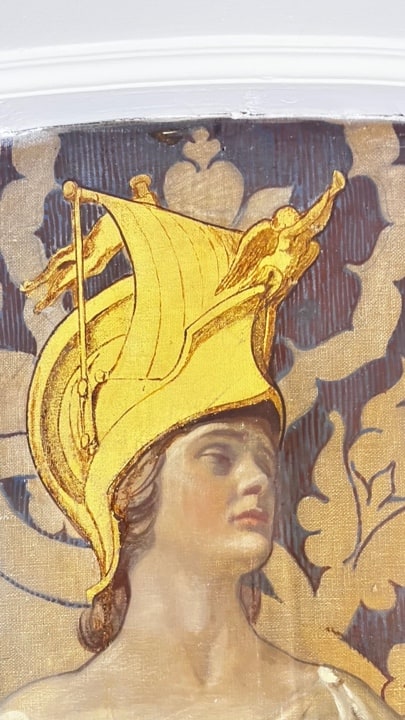
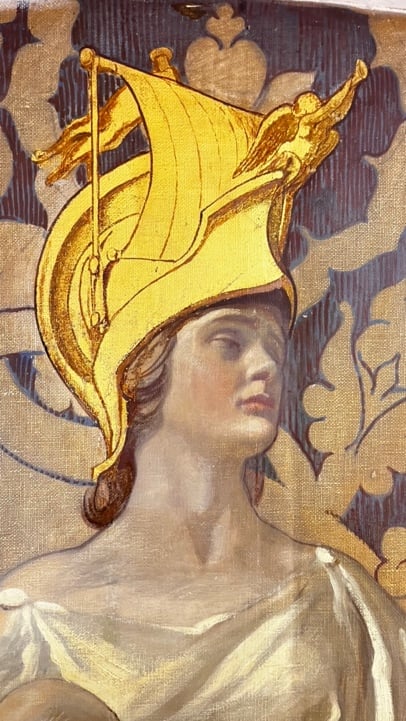
Ship-helmet figure during tratteggio and after
Tratteggio hatching still visible on the ship-helmet figure during retouching. Drag the handle to reveal the same figure after that retouching was blended.
Drag the gold handle right to reveal the after image.
Before: Ship-helmet figure during tratteggio retouching, with hatching still visible on the face and neck. After: Same ship-helmet figure after the tratteggio was blended into the finished paint.
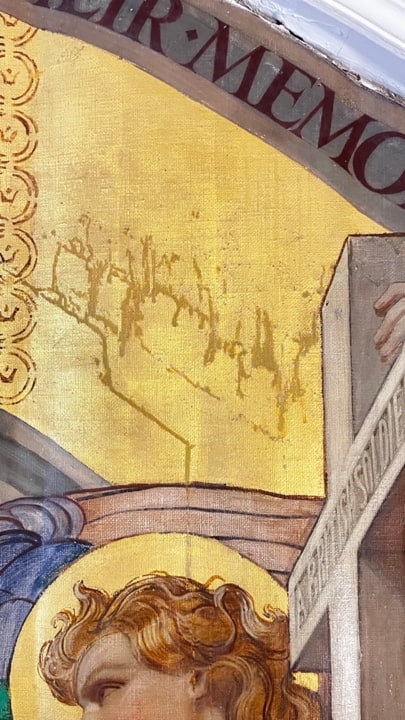
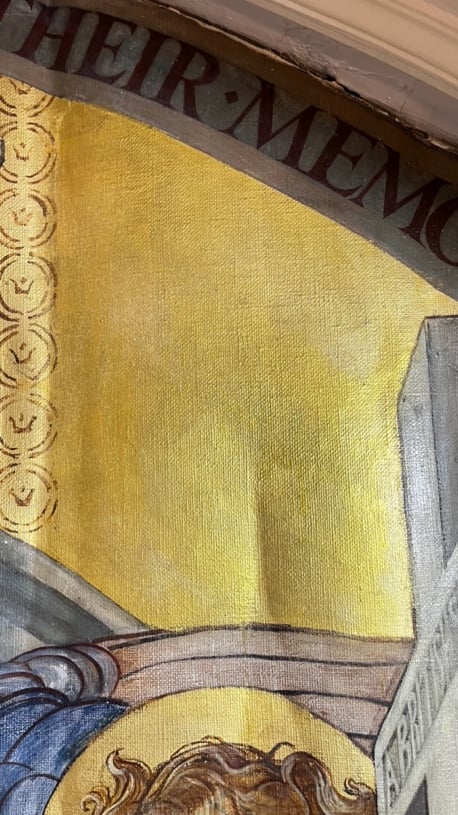
Their Memory gold ground before and after reintegration
Paint loss in the gold ground under Their Memory. Drag the handle to reveal the same passage after the gold was reintegrated.
Drag the gold handle right to reveal the after image.
Before: Their Memory lettering with losses in the gold ground before reintegration. After: Same Their Memory passage after the gold ground was reintegrated.
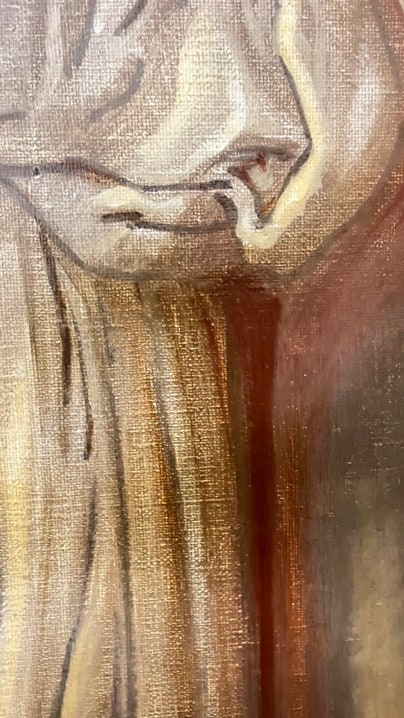
Glazing detail on marouflage paint layer 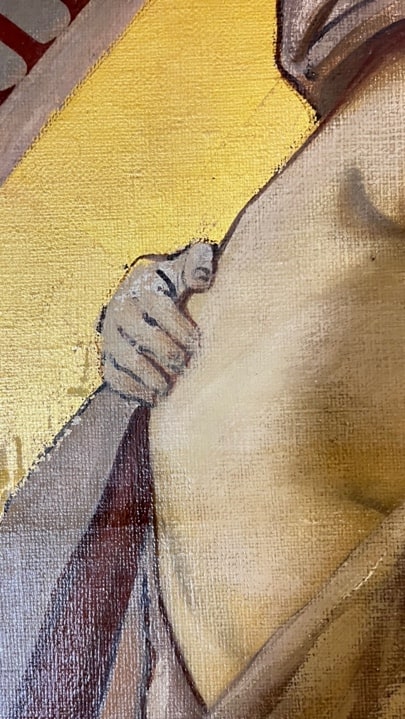
Inpainting on decorative frieze in the Hall of Remembrance
Materials used
- Conservation grade pH neutral cleaning soap.
- Odourless mineral spirits (OMS).
- Paraloid B 72 acrylic resin.
- Acetone and industrial methylated spirits (IMS).
- Conservation grade pigments for colour matching and visual reintegration.
Results
The conservation treatment successfully removed surface contamination associated with the water damage incident and improved the overall legibility of the marouflage paintings and decorative friezes.
The treatment also revealed and documented evidence of historic over cleaning, which had caused abrasion and thinning of the original paint layers in several locations. Through careful cleaning and selective visual reintegration, the visual impact of these abrasions was significantly reduced without compromising the authenticity of the original painted surfaces.
The combined use of glazing, tratteggio and punteggio techniques enabled the successful integration of selected losses while maintaining a clear distinction between original material and conservation intervention.
The commemorative scheme
The Hall of Remembrance scheme includes the marouflage murals and a regimental frieze of crests and dated emblems. These stills record passages of that painted decoration.
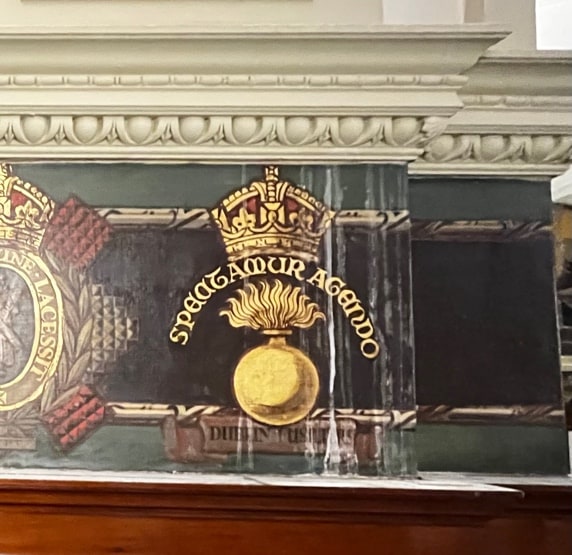
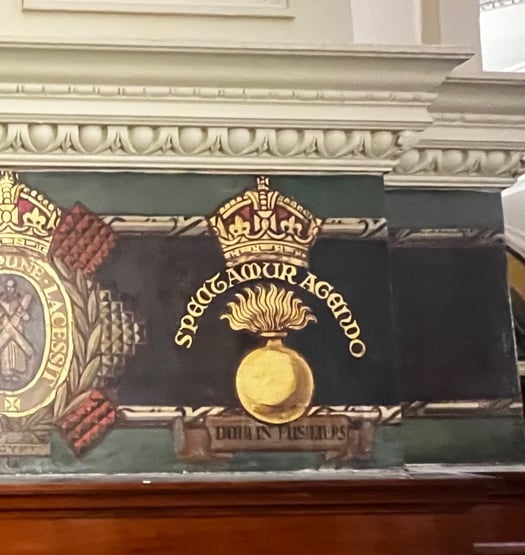
Dublin Fusiliers crest before and after treatment
The Dublin Fusiliers grenade badge with water streaks down the panel. Drag the handle to reveal the same badge after cleaning.
Drag the gold handle right to reveal the after image.
Before: Dublin Fusiliers crest before treatment, with water streaks down the dark ground. After: Same Dublin Fusiliers crest after cleaning, with the water streaks reduced.
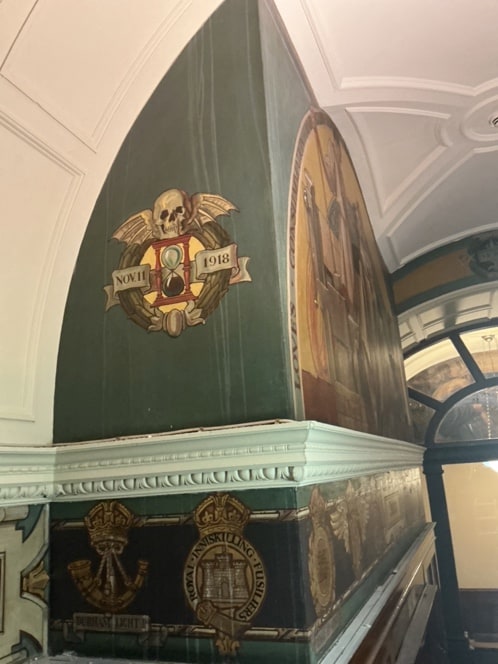
Regimental crests and commemorative frieze, Hall of Remembrance 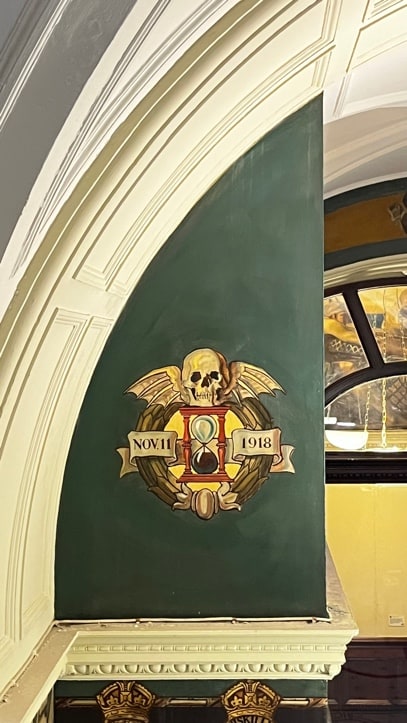
Nov 11 1918 commemorative emblem in the Hall of Remembrance
Recommendations
- Continue regular environmental monitoring within the Hall of Remembrance, with particular attention to potential sources of water ingress and fluctuations in relative humidity.
- Undertake periodic condition inspections of the marouflage paintings and decorative friezes to monitor any future changes.
- Avoid aggressive cleaning methods during routine maintenance.
- Ensure that any future conservation interventions are preceded by appropriate testing and undertaken by qualified conservators.
- Maintain photographic and written records to support future conservation management and condition monitoring.
Conclusion
The conservation treatment programme successfully addressed the effects of water ingress affecting the two marouflage paintings and decorative friezes within the Hall of Remembrance, Liverpool Town Hall.
Cleaning removed surface contamination and improved the legibility of the decorative scheme, while careful examination revealed evidence of abrasion resulting from a previous over cleaning campaign. Selective visual reintegration using glazing, tratteggio and punteggio techniques reduced the visual impact of these abrasions while preserving the integrity and authenticity of the original painted surfaces.
All inpainting and retouching interventions were undertaken using reversible archival materials in accordance with current professional conservation standards.
Outcome
- Surface contamination from the water ingress was removed and the decorative scheme reads more clearly again.
- Historic over cleaning and abrasion were documented; selective inpainting improved unity while keeping intervention distinguishable on close examination.
- Reversible archival materials were used throughout, allowing future examination and retreatment without harm to the original fabric.
- The project adds to our Liverpool civic portfolio alongside St Georges Hall decorative repair and informs how we approach listed institutional interiors across the North West.
Official site: Liverpool City Council
Further reading
More from this project
Further footage from this commission.
Similar project?
Browse more case studies or portfolio photography.